

Quick answer: you can rent a metal detector in some places, but not everywhere, and rates vary a lot by shop. The listings we checked on November 13, 2026 charged $25 to $40 a day for a basic hobby detector. Many public libraries lend detectors for free, and a ring finder may be the better call for one lost ring, and buying usually wins if you'll go out more than a few times. Renting rarely makes sense for wading or gold prospecting, since the rental listings we found named only entry-level Garrett ACE models, not fully waterproof or gold detectors.
DetectorBrief is a participant in the Amazon Services LLC Associates Program, an affiliate advertising program designed to provide a means for sites to earn advertising fees by advertising and linking to Amazon.com.
This guide covers each option with real examples we checked on November 13, 2026, what renting costs actually are, a calculator to compare renting with buying, which kind of detector suits your trip, what to check before you leave the counter, and how to test it before you start searching. If you already know you want to buy, skip to our best metal detector for beginners guide.
Rent, borrow or buy?
Rent
For a short trip or one search
Detecting shops and some rental yards rent hobby detectors by the day. Not every area has one, so call first.
Borrow
To try the hobby for free
Some public libraries lend metal detectors. Check whether yours does, since many don't.
Buy
If you'll go out again
A few days of rental can add up to the price of an entry-level detector you keep.
Table of Contents
Where to rent a metal detector
No single store rents hobby detectors everywhere. What you can get depends on where you live, so start with the options below and call ahead.
Metal detecting and prospecting shops
Independent detecting shops are the best place to start. They rent hobby detectors, not construction tools, and staff can show you the settings and tell you where people detect locally. Serious Detecting in Michigan rents a detector for $25 a day, with a pinpointer, water package, or digging package for $5 each a day, but only to Washtenaw County residents aged 18 and up, on weekdays. High Plains Prospectors in the Kansas City area rents a Garrett ACE 400 for $25 a day and a pinpointer for $5 a day, and says the rental fee goes toward the price if you then buy a detector.
Search for "metal detector" plus your town, or call the nearest detecting or prospecting shop and ask. Rentals are often limited to locals and to people who pick up in person.
Local metal detecting clubs
A local club can point you to nearby rental shops and places where detecting is allowed. Kellyco keeps a directory of US clubs by state, and some clubs listed there say guests are welcome at meetings. It costs nothing to ask whether a member can show you how a detector works before you rent one.
Hardware stores and local rental yards
Some independent hardware stores and rental yards keep a detector in their rental fleet. Angeles Rentals in Port Angeles, Washington lists a Garrett ACE 400 at $25 for 4 hours, $40 a day, $160 a week, or $320 a month, with free in-store pickup or delivery for $50 plus $5 a mile. Hartville Hardware lists a Garrett ACE 200 rental at $100 but doesn't say online how long it's for, so call to confirm what that covers.
National equipment chains
Sunbelt Rentals lists a hand-held metal detector in its catalog, described as a tool to locate metal objects such as property stakes. That's a surveyor's tool, not a coin or jewelry detector, and no rates are shown online. It's worth a call if you're hunting for a buried property pin, not for a beach day.
What about Home Depot or Lowe's?
We couldn't find a hobby metal detector in either chain's online rental catalog on November 13, 2026. Rental stock varies by store, so if you've seen one listed locally, call that store to confirm before making a trip.
Peer-to-peer rental apps
The previous version of this guide mentioned Fat Llama. Its website now redirects to Hygglo's UK site, and we couldn't reliably confirm a US peer-to-peer app that lists metal detectors. If you do find one, inspect the detector carefully before you take it, since you're relying on a stranger's upkeep.
Borrow one free from your library
Many public libraries now run a "Library of Things" that lends tools and gadgets, and metal detectors are a common item. Three examples we checked:
- Vernon Area Public Library in Illinois lends a beginner detector with knob controls, a pinpointer, and instructions for 3 weeks.
- Rockport Public Library in Massachusetts lends a detector for 3 weeks.
- Poughkeepsie Public Library District in New York lends a Minelab X-Terra Pro with a Pro-Find 35 pinpointer and headphones for 7 days. Borrowers must be district residents aged 18 and up who have held a card for at least 6 months, and late returns cost $5 a day.

Search your library's catalog for "metal detector" or ask at the desk. Expect to sign a borrower agreement, bring your own digging tool and gloves, and return everything clean. It's the cheapest way to find out whether you like the hobby before you spend anything.
Lost a ring? Call a ring finder first
If you need a detector for one lost item, a person who already owns a good one and knows how to use it may get it back faster. The Ring Finders is a directory of independent detectorists who search for lost rings and other metal items. Finders typically work for a reward plus a call-out fee to cover travel, and you agree on terms directly with the finder. Check the directory for someone near you before renting a detector you've never used.
Call first: questions to ask before you go
- Do you have a detector free for my dates, and which model is it?
- Do you rent to non-residents? Is there a minimum age, or an ID or card requirement?
- What is the daily and weekly rate, and is there a deposit?
- What's included: batteries or a charger, headphones, a pinpointer, a digging tool?
- Is the coil waterproof, and is the control box waterproof?
- What are the pickup and return hours, and do you deliver?
- Does the rental fee count toward buying a detector?
- What do you charge for late returns or damage?
What renting costs, and how deposits work
Rates checked November 13, 2026, and subject to change. These are the listings we could confirm online, not national averages. Few rental places publish prices, so treat them as examples and call for a quote.
Swipe for more columns
| Where | What they rent | Rate listed | Extras and fees | Restrictions |
|---|---|---|---|---|
| Serious Detecting (Michigan shop) | Hobby detector | $25 a day | Pinpointer, water package or digging package, $5 a day each | Washtenaw County residents, 18 and up, weekdays 8:30 to 4:30. "Contract terms and conditions apply" |
| High Plains Prospectors (Kansas City area shop) | Garrett ACE 400 | $25 a day | Pinpointer $5 a day | Rental fee goes toward a detector if you buy one |
| Angeles Rentals (Port Angeles, Washington rental yard) | Garrett ACE 400 | $25 for 4 hours, $40 a day, $160 a week or $320 a month | Free in-store pickup, or delivery for $50 plus $5 a mile | No deposit or damage terms listed online |
| Hartville Hardware | Garrett ACE 200 | $100 listed | Not stated | Rental period not stated online, so call |
| Sunbelt Rentals (national chain) | Hand-held locator for property stakes | Not shown online | Not stated | A surveying tool, not a coin or jewelry detector |
| Public libraries (examples below) | Varies by library | Free with a card | Poughkeepsie charges $5 a day for late returns | Often residents only. Poughkeepsie requires age 18 and up and a card held 6 months |
In these listings, a basic hobby detector costs $25 a day at two detecting shops and $40 a day at a rental yard, which also lists $25 for 4 hours and $160 a week. A pinpointer added $5 a day. High Plains Prospectors notes that better detectors cost more to rent.
Fees that don't show up in the daily rate
- Deposit: whether one is required, how much, and when it comes back. A refundable deposit is money you get back, not a cost, as long as the detector returns undamaged.
- Damage: what you owe if the detector or coil is damaged, lost, or stolen.
- Late returns: the charge per extra day.
- Delivery or pickup: Angeles Rentals, for example, charges $50 plus $5 per mile for delivery.
- Add-ons: pinpointer, headphones, digging tool, and batteries.
- Tax: sales tax may be added to the rate.
- Credit toward buying: some shops put the rental fee toward a detector if you buy one, which lowers the real cost of renting.
Deposits: refundable vs. nonrefundable charges
None of the four shop listings we checked published a deposit amount online. Serious Detecting says contract terms apply, so ask to see them before you pay. When you compare prices, keep two numbers separate:
- Final rental cost: the rate times the days, plus add-ons and any nonrefundable fees such as delivery, a damage waiver, or tax. This is what renting actually costs you.
- Upfront payment or hold: the final rental cost plus any refundable deposit. The deposit ties up money for a few days, but it comes back if the detector returns undamaged, so it isn't a cost.
Worked example (illustrative numbers, not a quote): $35 a day for 4 days is $140. Add $20 of nonrefundable fees and the final rental cost is $160. With a $150 refundable deposit, you would pay $310 up front and get $150 back when you return the detector. A detector that costs $180 to buy would be $20 more than this rental, before tax, accessories, or any resale value.
Rent or buy calculator
Enter a real quote to see what a rental costs in the end, how much you pay up front, and how that compares with buying. A refundable deposit counts toward what you pay up front, not toward the final cost.
Break-even: when buying beats renting
Using the rates on this page (checked November 13, 2026), here is what common trips add up to. Compare the total with the current price of a detector you would buy, such as the Garrett ACE 400 that the shops rent out.
Swipe for more columns
| Days rented | $25 a day | $25 a day plus $5 pinpointer | $40 a day |
|---|---|---|---|
| 1 day | $25 | $30 | $40 |
| A weekend (2 days) | $50 | $60 | $80 |
| Two weekends (4 days) | $100 | $120 | $160 |
| 5 days | $125 | $150 | $200 (or $160 at the weekly rate) |
How the break-even works: divide the purchase price, minus any nonrefundable fees, by what each rental day costs you (the daily rate plus add-ons). The answer is roughly how many rental days it takes for renting to reach the purchase price. Leave the refundable deposit out, because you get it back. Reaching the purchase price doesn't automatically make buying the better deal: buying usually adds sales tax and accessories such as a pinpointer or headphones, while a detector you own keeps some resale value. At $25 a day, a $250 detector breaks even at 10 days. At $40 a day, renting passes $250 on day 7. Both are illustrative numbers, not quotes.
If the rental total gets close to the purchase price, buying usually wins, because you keep the detector. Renting makes the most sense for a single trip or a single search. Buying makes sense once you know you'll go out again. If you want a better detector for less, our used metal detectors guide covers what to check before you buy one.
What this math leaves out
- A refundable deposit isn't a cost if you return the detector in good shape.
- Some shops credit the rental fee toward a purchase, which makes a trial rental close to free if you then buy.
- Taxes, delivery, late fees, and damage charges add to the rental side.
- A detector you buy keeps some resale value, and batteries, a pinpointer, and a digging tool add to the buying side.
- A library loan costs nothing, so check that first.
When renting or borrowing makes sense
- One vacation: a single beach trip where you won't detect again at home.
- One search: a lost ring or key in the yard or at the beach, although a ring finder may be quicker.
- Trying before buying: a day with a real detector tells you more than a spec sheet. A library loan or a shop rental that credits the fee toward a purchase is ideal.
- A property pin: finding a buried survey stake, where a chain like Sunbelt may have the right tool.
What kind of detector to rent for your trip
Rental fleets are small, and the detectors we saw listed were entry-level Garrett ACE models. That suits most first outings, but not every job. Match the detector to the trip, and know when renting isn't the answer:
Swipe for more columns
| What you want to do | What to rent | When renting isn't the best choice |
|---|---|---|
| Coins and jewelry in a park, yard or field | a basic hobby detector like the Garrett ACE 300 or ACE 400 is the right tool. A numeric target ID helps you skip some trash. | Renting works well here, since this is what rental fleets are stocked for. If you'll go out again, the calculator may point to buying. |
| Dry beach sand | the same basic detectors work. Their coils are waterproof, but the Garrett control boxes are not, so keep the box dry. | Renting works if you stay on dry sand. Don't take a rental with a non-waterproof control box to the waterline. |
| Saltwater beach, wet sand and wading | salty wet sand can make simple single-frequency detectors noisy, and you need a fully waterproof unit to go in the water. Ask for a multi-frequency, fully waterproof model like the Minelab Vanquish 360, which few rental places stock. See our beach metal detector guide. | None of the rental listings we found offered a fully waterproof detector, so you may have to buy one, or stay on dry sand. |
| Gold prospecting | entry-level coin detectors aren't built for small gold. Ask a prospecting shop what it rents, and see our gold detector guide. | A general rental detector is a poor fit for small nuggets. Ask a prospecting shop for a gold model, or skip renting. |
| One lost ring or set of keys | any working detector will do if you know roughly where it fell, and a pinpointer helps a lot. A ring finder with their own gear is often faster. | Call a ring finder first, especially for a beach or a large area. They bring their own gear and experience. |
| A buried property pin | ask for a locator built for survey stakes, like the one Sunbelt lists. A hobby coin detector isn't designed for that job. | A hobby coin detector isn't designed for this. Ask for a locator, or call a surveyor. |
Whatever you rent, don't submerge any part that isn't rated for water, and ask the shop to show you the settings before you leave.
Before you pay: a 7-point rental checklist

- Coil and cable: check the coil cable and connector for damage, and photograph any existing scratches or cracks.
- Shaft locks: extend the shaft to your height and check that each lock holds without slipping or wobbling.
- Battery and charger: confirm whether batteries or a charger are included, then turn it on in the store and check that it beeps over a coin or key.
- Included accessories: confirm whether a pinpointer, headphones, or a carry bag is included, and what each add-on costs.
- Operating modes: ask for a quick walk-through of the settings, including ground balance if it has one.
- Stated water resistance: ask whether the coil and the control box are waterproof, and don't submerge anything that isn't rated for it.
- Damage and return policy: get the return time, late fee, damage terms, and deposit terms in writing, including whether the deposit is refundable.
Also ask where detecting is allowed locally. Parks and beaches often have their own rules, so check before you dig.
How to test a rental detector before you search
A few minutes of practice tells you what a good target sounds like, so you dig less trash. Do this before your first search:
- Go somewhere you're allowed to detect, such as your own yard.
- Lay a coin and a key on the ground a few feet apart.
- Hold the coil low and level, just above the grass, and sweep slowly from side to side.
- Pass over each target and listen to the tone. If the detector shows a target ID number, note what each one reads.
- Change one setting at a time, such as discrimination, and listen to how the responses change.
- Once you know the sounds, start searching, and dig only where digging is allowed.

For first-day technique, our guide on how to use a metal detector covers the basics.
Compare the 5 detectors
Specs from the makers and the Amazon listings, checked November 13, 2026. "Rental availability" only covers the rental listings named on this page, so a shop near you may stock something else.
Swipe to compare all 5 detectors (9 columns)
| Detector | Best for | Target ID | Water | Weight | Frequency | Warranty | Rental availability | Main drawback |
|---|---|---|---|---|---|---|---|---|
| Bounty Hunter TK4 Tracker IV | Occasional use, simplest controls | None (analog, learn by sound) | 8 in coil, waterproof (listing) | About 2.8 lb (1,270 g, Bresser spec) | About 6.5 kHz (listings say 6.5 or 6.6) | 5 years (US retailer listing) | Not seen in rental listings we checked | No target ID |
| Garrett ACE 300 Best first detector | Beginners who want a numeric target ID | 0 to 99 | Coil only | 2.8 lb | 8 kHz, adjustable | 3 years | Not seen in rental listings we checked | No Iron Audio (the ACE 400 adds it) |
| Garrett ACE 400 | Buying the model shops rent out | 0 to 99, plus Iron Audio | Coil only | 2.9 lb | 10 kHz, adjustable | 3 years | Rented by High Plains Prospectors and Angeles Rentals (Nov 13, 2026) | Only the coil is waterproof |
| Fisher F22 | Lightest, light rain | 1 to 99 | Coil waterproof, control box IP54 (not submersible) | 2.3 lb | 7.69 kHz | 5 years | Not seen in rental listings we checked | Control box not submersible |
| Minelab Vanquish 360 | Beach, wading, land and water | -19 to 99 | Whole unit, IP68 to 16 ft | 2.6 lb | Multi-IQ multi-frequency | 3 years (battery 6 months) | Not seen in rental listings we checked | More features than a casual user needs |
5 detectors to buy instead of renting
If the math points to buying, these five are common first detectors. Specs come from the makers and the Amazon listings, checked November 13, 2026. We don't list prices because they change daily, so use the button to check the current price and compare it with the rental total from the calculator above.
Rent or buy: the short version
- Not sure you'll like it? Borrow from a library, or rent a Garrett ACE 400 first. High Plains Prospectors puts the rental fee toward a detector bought from them.
- Going out more than a few times? Buy. The Garrett ACE 300 is our pick for most first-timers, and the ACE 400 is the same model the shops rent.
- Wading or wet sand? Buy the Minelab Vanquish 360. None of the rental listings we found offered a fully waterproof detector.
- Want the lightest or the simplest? The Fisher F22 weighs 2.3 lb, and the Bounty Hunter TK4 has knobs instead of a screen.
1. Bounty Hunter TK4 Tracker IV: simplest controls
The Bounty Hunter TK4 Tracker IV uses analog knobs instead of a screen, with three modes: all metal, tone, and discrimination. Its listing describes an 8 in waterproof search coil and adjustable sensitivity. There's no digital target ID, so you learn targets by sound.
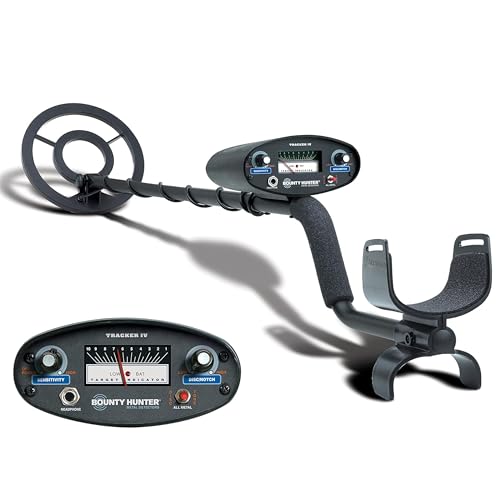
Bounty Hunter TK4 Tracker IV
- Coil
- 8 in, waterproof (listing)
- Modes
- All metal, tone, discrimination
- Controls
- Analog knobs
- Target ID
- None
Good for: a first detector with no screen or menus to learn.
Skip if: you want a numeric target ID. The Garrett ACE 300 has one.
Verdict: the easiest detector here to learn, but the least informative, because it has no target ID. Buy it for occasional yard and park hunts, not as a detector to grow into.
As a rental alternative: None of the rental listings we found offered this model, so you can't try it first. Its simple knobs are the easiest controls here to learn without a shop walk-through.
Pros
- Simple analog controls
- Waterproof coil
- Three detection modes
Cons
- No digital target ID
- Fewer published specs than the Garrett and Fisher picks
Affiliate link. We may earn a commission at no cost to you.
Compared with the Garrett ACE 300: the TK4 is simpler, with knobs and no screen. The ACE 300 adds a 0 to 99 target ID, five search modes and adjustable frequency.
2. Garrett ACE 300: best first detector
The Garrett ACE 300 shows a 0 to 99 target ID on screen, has five search modes plus pinpoint, adjustable notch discrimination and adjustable frequency, and runs at 8 kHz with a 7 x 10 in concentric coil. Garrett's US spec table lists it at 2.8 lb with a 42 to 51 in shaft, four AA batteries and a coil cover included, and a 3-year limited warranty. Headphones aren't included in Garrett's current US package. The link goes to a bundle that also includes a carry bag and a search coil cover.
From our own digs: we hunt coins and rings in sand and dirt with a Garrett ACE 300.

Garrett ACE 300
- Target ID
- 0 to 99
- Frequency
- 8 kHz, adjustable
- Coil
- 7 x 10 in concentric
- Weight
- 2.8 lb
- Warranty
- 3 years
- Bundle adds
- Carry bag, coil cover
Good for: a first detector you won't outgrow after a few outings.
Skip if: you want to wade in with it. The listing calls only the coil waterproof.
Verdict: the best all-round first detector here. It gives you a numeric target ID and five modes, and the bundle adds a carry bag and coil cover. Buy it once you know you'll go out more than a few times.
As a rental alternative: None of the rental listings we found offered it, but it shares the ACE 400's shaft, screen and target ID scale, so renting an ACE 400 is a fair trial run.
Pros
- Numeric target ID and five modes
- Batteries, carry bag and coil cover included
- One we use ourselves for coins and rings
Cons
- Only the coil is listed as waterproof
- No Iron Audio, which the ACE 400 adds
Affiliate link. We may earn a commission at no cost to you.
Compared with the Garrett ACE 400: same shaft, screen and target ID scale. The ACE 400 adds Iron Audio, a larger 8.5 x 11 in DD coil and a 10 kHz frequency, and weighs 0.1 lb more.
3. Garrett ACE 400: the detector shops rent out
The Garrett ACE 400 is the model two of the rental listings above offer. It adds Iron Audio, which lets you hear iron trash before you dig, to everything the ACE 300 does, and uses a 10 kHz frequency with an 8.5 x 11 in DD coil. Garrett's US spec table lists it at 2.9 lb, with four AA batteries and a coil cover included, and a 3-year limited warranty. Headphones aren't included in Garrett's current US package.

Garrett ACE 400
- Target ID
- 0 to 99, plus Iron Audio
- Frequency
- 10 kHz, adjustable
- Coil
- 8.5 x 11 in DD
- Weight
- 2.9 lb
- Warranty
- 3 years
Good for: owning the same detector you would have rented.
Skip if: you want the lightest detector here. The Fisher F22 is 2.3 lb.
Verdict: the one to buy after a good rental, because it's the exact model two of the shops rent out. Iron Audio also helps you skip iron trash in old parks and yards.
As a rental alternative: Two of the rental listings we found offer this exact model, so you can rent it first and buy it if you like it. High Plains Prospectors puts the rental fee toward a detector bought from them.
Pros
- Iron Audio helps skip iron trash
- DD coil
- Same model the rental shops use
Cons
- Only the coil is waterproof
- Heavier than the Fisher F22
Affiliate link. We may earn a commission at no cost to you.
Compared with the Garrett ACE 300: the ACE 400 adds Iron Audio, a DD coil and a higher 10 kHz frequency. The ACE 300 is a little lighter and simpler.
4. Fisher F22: lightest, with a 5-year warranty
The Fisher F22 is the lightest detector here at 2.3 lb. It runs at 7.69 kHz with a 9-in waterproof elliptical coil, four modes (jewelry, coin, artifact, and custom), and a 1 to 99 target ID. The control box is rated IP54 weatherproof, which means it handles rain and splashes but isn't submersible. It runs on two AA batteries, has a 1/4 in headphone jack (headphones not included), and comes with a 5-year limited warranty, according to Kellyco's spec sheet.

Fisher F22
- Target ID
- 1 to 99
- Frequency
- 7.69 kHz
- Coil
- 9 in elliptical, waterproof
- Weight
- 2.3 lb
- Warranty
- 5 years
Good for: longer hunts where weight matters, and detecting in light rain.
Skip if: you want to submerge the whole detector. Only the Minelab Vanquish 360 here is fully waterproof.
Verdict: the pick for long hunts and light rain. It's the lightest detector here at 2.3 lb and has a 5-year warranty, but it doesn't include headphones and the control box can't go underwater.
As a rental alternative: None of the rental listings we found offered it. If weight is your main concern, ask a shop whether you can hold one before you buy.
Pros
- Lightest pick at 2.3 lb
- Weatherproof control box (IP54)
- 5-year limited warranty
Cons
- Headphones not included
- Not submersible
Affiliate link. We may earn a commission at no cost to you.
Compared with the Garrett ACE 300: the F22 is 0.5 lb lighter, has a weatherproof control box and a 5-year warranty against 3 years. The ACE 300 has five modes against four, and its bundle adds a carry bag and coil cover.
5. Minelab Vanquish 360: fully waterproof
The Minelab Vanquish 360 is the only detector here that's waterproof as a whole unit, rated IP68 to 16 ft. It's Minelab's newer version of the Vanquish 340 listed in the previous version of this guide. It uses Multi-IQ multi-frequency, with Park, Beach, and All Metal modes, a custom profile and pinpoint, a -19 to 99 target ID, and a built-in rechargeable battery. Minelab lists it at 2.6 lb, 31 to 56 in long, with a 3.5 mm headphone output (headphones not included) and a 3-year warranty on the control box and coil. Minelab's warranty table covers the battery for 6 months.

Minelab Vanquish 360
- Water
- Whole unit, IP68 to 16 ft
- Frequency
- Multi-IQ multi-frequency
- Target ID
- -19 to 99
- Weight
- 2.6 lb
- Warranty
- 3 years (battery 6 months)
Good for: beach and wading, or anyone who wants one detector for land and water.
Skip if: you only detect dry parks and yards. The Garrett ACE models cover that.
Verdict: the only pick here you can take into the water. Buy it if wading or wet beach sand is part of the plan, since none of the rental listings we found offered a fully waterproof detector.
As a rental alternative: None of the rental listings we found offered a fully waterproof detector, so buying may be the only practical way to get one for wading.
Pros
- Fully waterproof to 16 ft
- Multi-frequency for beach and park
- Rechargeable battery
Cons
- Headphones not included
- More features than a casual user needs
Affiliate link. We may earn a commission at no cost to you.
Compared with the Garrett ACE 400: the Vanquish 360 can go fully underwater and runs Multi-IQ multi-frequency, which Minelab pitches for both beach and park hunting. The ACE 400 has a waterproof coil only and a single adjustable frequency.
Permission, rules and safety
A rental shop hands you the detector, not the right to use it anywhere. Rules differ from place to place, so check before you dig.
- Private land: get the owner's permission first, ideally in writing, and agree on who keeps what you find.
- Public parks and beaches: rules vary by city, county, and state. Some allow detecting, some need a permit, and some ban digging. Read the posted rules or call the parks office.
- National parks: federal rules prohibit possessing or using a metal detector in national park areas unless specifically authorized, and disturbing or removing archaeological resources is also prohibited (36 CFR 2.1).
- Digging deeper in a yard: if you're digging more than a few inches, for example, to reach a property pin, call 811 first so buried utility lines can be marked.
- Recovery etiquette: dig a neat plug, refill every hole, pack out the trash you dig up, and leave the spot looking untouched.
- Possible munitions: if you uncover something that looks like a shell, grenade, or other ordnance, follow the military's 3Rs: recognize it, retreat without touching it, and report it by calling 911.
This is general information, not legal advice. When in doubt, ask the landowner or the agency that manages the land.
Frequently asked questions
Does Home Depot rent metal detectors?
We couldn't find a hobby metal detector in Home Depot's or Lowe's online rental catalogs on November 13, 2026. Rental stock varies by store, so call your local store to check. Metal detecting shops, some hardware stores and rental yards, and many public libraries are better places to look.
How much does it cost to rent a metal detector for a day?
In the listings we checked, a basic hobby detector cost $25 a day at two metal detecting shops and $40 a day at a rental yard, with a pinpointer about $5 a day extra. Better detectors usually cost more. Ask about deposits, damage charges, and late fees before you pay.
Can you borrow a metal detector from a library?
Often, yes. Many libraries lend metal detectors through a Library of Things collection. Examples include the Vernon Area Public Library in Illinois and the Rockport Public Library in Massachusetts, which lend for 3 weeks, and the Poughkeepsie Public Library District in New York, which lends a Minelab X-Terra Pro kit for 7 days. Search your library's catalog or ask at the desk.
Can you rent a metal detector for one day?
Yes. The shops and rental yards we found all quote a daily rate. Some also offer weekly rates, like $160 a week at Angeles Rentals in Washington.
Is it better to rent or buy a metal detector?
Rent or borrow for a single trip, a single search, or to try the hobby. Buy once you know you'll go out again. Multiply the daily rate by the number of days you plan to detect, then compare it with the current price of a comparable detector, such as the Garrett ACE 400 that rental shops use.
Who can help find a lost ring with a metal detector?
The Ring Finders is a directory of independent detectorists who search for lost rings and other metal items, usually for a reward plus a call-out fee. It can be faster than renting a detector and learning to use it yourself.
Do I need permission to use a rented metal detector?
Often, yes. Get the owner's permission before detecting on private land. Rules for public parks and beaches vary by city, county, and state, and some require a permit, so check posted rules or call the parks office. Metal detectors are prohibited in US national parks unless specifically authorized.
Is a rental fee worth it if I might buy later?
It can be. Some shops, like High Plains Prospectors in the Kansas City area, put the rental fee toward a detector if you buy one later. Ask about this before you rent, and use the calculator on this page to compare the rental total with the purchase price.
Is a metal detector rental deposit refundable?
A refundable deposit comes back when you return the detector in good condition, minus any charges your rental contract allows. None of the four shop listings we checked published a deposit amount online, so ask whether a deposit is required, how much it is, and when you get it back.
Sources and related guides
Rental rates, terms, and library loans were checked on November 13, 2026, and the four shop listings were rechecked on November 14, 2026. All are subject to change. Where a listing doesn't publish a deposit, damage terms, or rental period, we say so rather than guess. Detector specs come from the makers' US pages, the retailers listed below, and the exact Amazon listings, rechecked on November 14, 2026.
- Serious Detecting, metal detector rental
- High Plains Prospectors, metal detector rental near me
- Angeles Rentals, Garrett ACE 400 rental
- Hartville Hardware, Garrett ACE rental
- Sunbelt Rentals, metal detector
- Vernon Area Public Library, Library of Things metal detector
- Rockport Public Library, metal detector
- Poughkeepsie Public Library District, metal detector kit
- The Ring Finders directory
- 36 CFR 2.1, national park resource protection
- DENIX, explosives safety and the 3Rs
- Bresser, Bounty Hunter Tracker IV specs
- Adorama, Bounty Hunter Tracker IV listing (US, item no longer stocked)
- Garrett, ACE 300 page with the US ACE 400/300 spec comparison
- Garrett, ACE 400 technical specifications
- Kellyco, Fisher F22 with 9 in coil
- Minelab, Vanquish 360 tech specs
- Minelab, warranty periods (Vanquish series and batteries)
- Kellyco, metal detecting clubs and groups directory
Related guides
- Best metal detectors for beginners
- Buying a used metal detector
- How to use a metal detector
- Best pinpointers
- Best metal detecting shovels
- Best metal detectors for kids
- Best beach metal detectors
The bottom line
Check your library first, since a free loan is the cheapest way to try metal detecting. For a single lost ring, call a ring finder. Rent from a detecting shop or rental yard for a one-off trip, and ask whether the fee counts toward the purchase price. If you'll go out more than a few times, buy: the Garrett ACE 300 is our pick for most first-timers, and the ACE 400 is the same detector the rental shops use. Once you have one, a pinpointer and a digging tool round out the kit.