

Used metal detectors can be a smart way to get a better machine for less money, as long as you check a few things before you pay. Check the coil and cable for cracks, inspect the battery compartment for corrosion, and test the detector on real targets in the ground, not just in the air. Ask for the original receipt, because some warranties carry over to a second owner. And pay in a way that protects you. A detector that passes those checks is often just as good as a new one.
DetectorBrief is a participant in the Amazon Services LLC Associates Program, an affiliate advertising program designed to provide a means for sites to earn advertising fees by advertising and linking to Amazon.com.
Table of Contents
Is a Used Metal Detector Worth It?
For many people, yes. Metal detectors have few moving parts, and a well-made machine from a known brand can work fine for years. Buying used can put a stronger detector in your hands for the price of a basic new one, or let you try the hobby without spending much at all.
The catch is that you can't see how the detector was treated. It may have been dropped on rocks, left in a hot car, or soaked in saltwater and put away wet. Most of that damage shows up if you know where to look, which is what the rest of this guide covers.
New is the better choice in a few cases. If you want a full warranty and an easy return, buy new. The same goes for a waterproof detector you plan to take underwater, since a hidden leak can ruin it. If you just want a simple starter machine, the price gap between new and used may not be worth the risk. Our guide to the best metal detector for beginners covers solid new options, and our breakdown of metal detector prices shows what each range gets you.
Where to Find Used Metal Detectors
Detector dealers are often the safest place to buy used. Many take trade-ins and sell demo units, and dealers are more likely to have checked the machine and stand behind it if something goes wrong. Prices are usually a bit higher than a private sale, but you're paying for that peace of mind.
Detecting clubs and online forums are another good source. Many sellers there are longtime hobbyists who have taken good care of their gear and are moving on to a different model. You can often ask other members about a seller or a specific detector before you buy.
Online marketplaces and local classified sites offer the most choice, but also the most risk. Pawn shops sometimes have detectors too, but the staff may not know much about them, so you'll need to do the checking yourself.
Whenever you can, buy from someone local and test the detector in person. Buying a used detector you can't see or hold means trusting the seller's description, and that is where most bad deals start.
What to Check Before You Buy
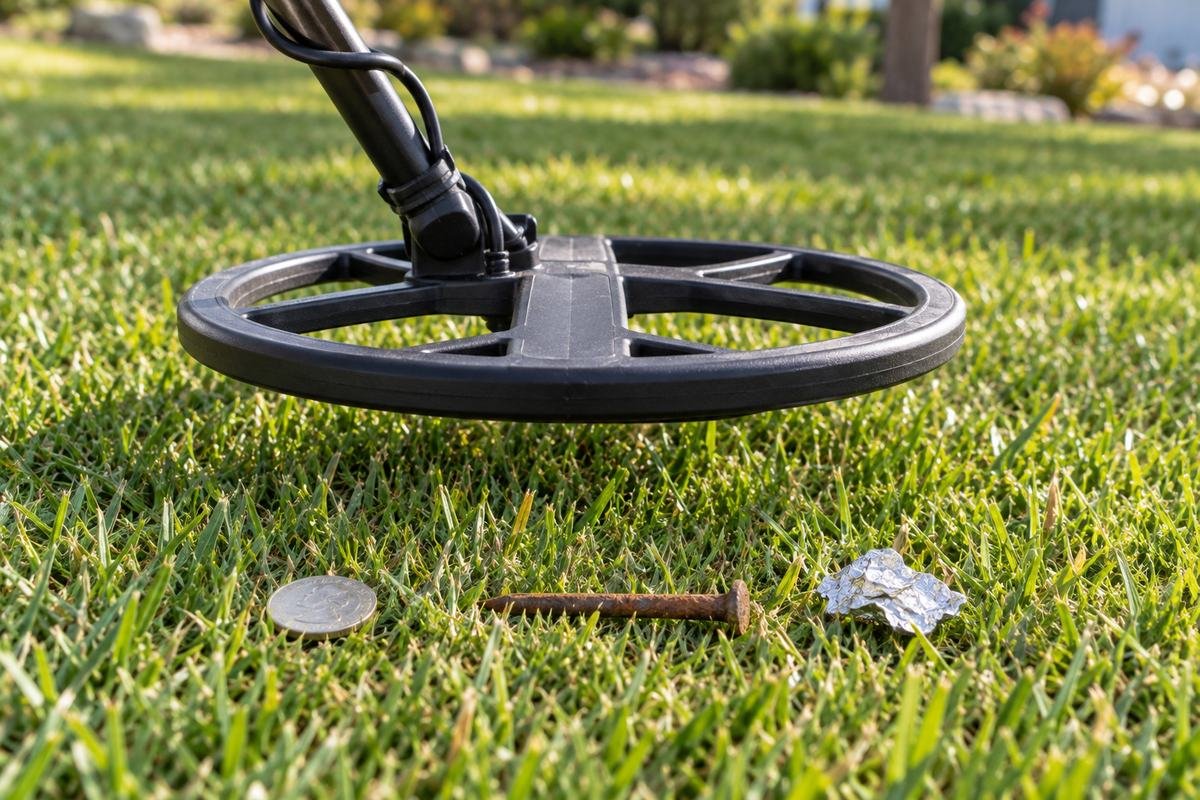
Bring a few things: a coin, an iron nail, a piece of aluminum foil or a pull tab, and headphones if the detector has a headphone jack. If you can, read the owner's manual for that model before you go. Most makers post their manuals online for free.
The Coil and Cable
The search coil takes most of the abuse, so start there. Look for cracks in the coil housing, especially around the ears where it bolts to the shaft. Many coils have a plastic cover on the bottom called a skid plate. Scratches on the cover are normal, and it is cheap to replace, but if it comes off easily, ask to take it off so you can see the coil underneath.
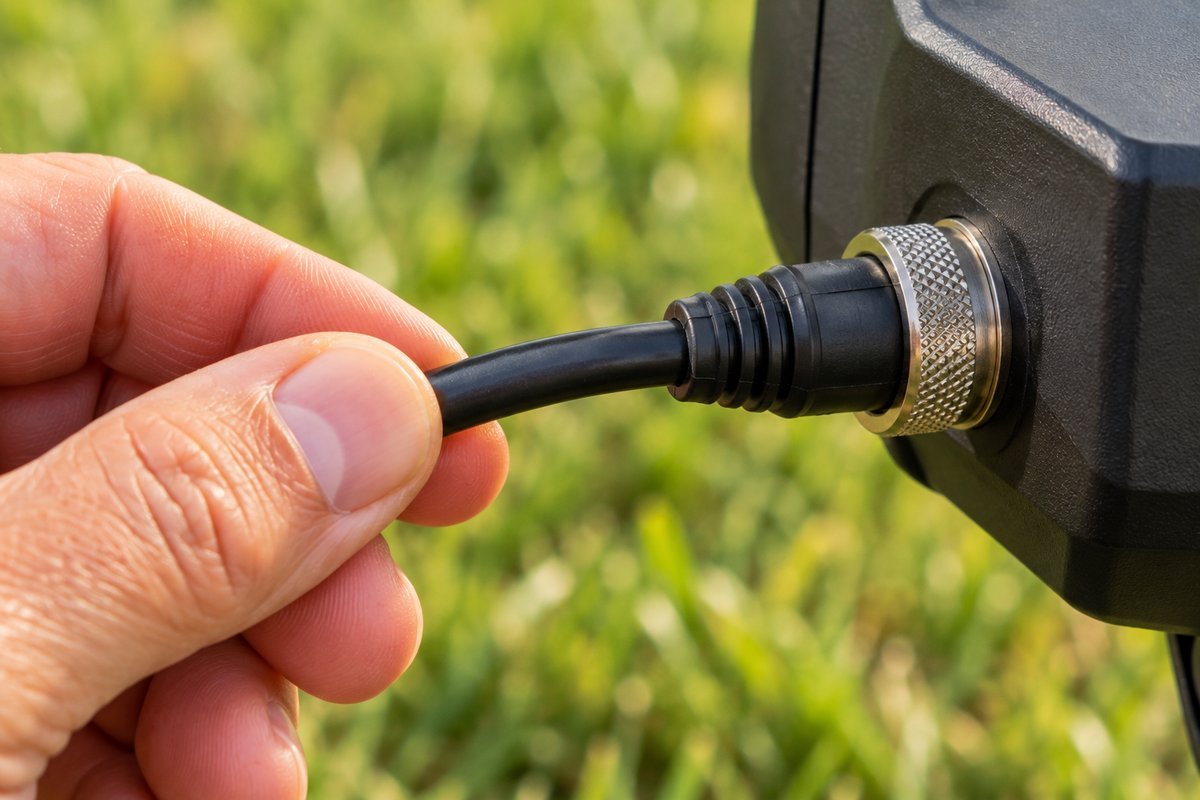
Then check the cable. Look for cuts, pinches, and spots where the outer jacket is worn through, and check that the connector pins are clean and straight. With the detector on and the coil held away from any metal, gently flex the cable near the coil and near the plug. If the detector crackles or beeps while you do this, there may be a loose wire or a bad connection inside.
The Battery Compartment and Charging
Open the battery door. White or green crust on the contacts means batteries leaked at some point. Light corrosion can sometimes be cleaned off, but heavy corrosion can mean more serious damage.
Many newer detectors have a built-in rechargeable battery, and those batteries wear out with age and use. Ask how long the battery lasts on a charge and whether it has ever been replaced. Make sure the charger or charging cable is included, since some detectors use a special cable that can be hard to find or costly to replace.
The Shaft, Handle, and Controls
Extend and collapse the shaft and make sure each lock holds tight. A wobbly shaft makes the detector tiring to swing and can cause false signals. Press every button, turn every knob, and check the screen for dead spots or fading. A cracked or loose control-box housing is a warning sign, since it can let in dust and moisture.
Test It on Real Targets
A detector that powers on isn't necessarily a detector that works well. Ask the seller to let you test it on real ground. A quick air test, where you wave targets past the coil, will show whether the detector beeps, but it won't show how it handles soil, depth, and junk. Most honest sellers will happily let you try it in a yard or a park.
Lay the coin, the nail, and the foil on the ground, then swing over each one. In a mode that doesn't block out iron, the detector should pick up all three, and most detectors will show a different tone or number for each. Some default modes ignore the nail on purpose, so check the manual for which mode to use. Try the coin under a little dirt or grass too. Run through the main settings, including ground balance if the detector has it, and listen through the headphones and the speaker. If you are new to detectors, our guide on how to use a metal detector explains what a normal response sounds like.
Watch for a detector that chatters, beeps at nothing, or loses targets that should be easy to find. Some noise near power lines or other detectors is normal, but a detector that won't settle down in an open yard may have a problem.
If you aren't sure what a good detector should feel like, try one first. Some dealers rent detectors, and our guide to metal detector rental explains how that works.
Extra Checks for Waterproof Detectors
Waterproof detectors need extra care when you buy them used, because a leak can quietly destroy the electronics. Ask whether the detector has been used underwater, how deep, and whether it ever leaked or went back to the maker for repair.
Check the rubber seals on the battery door and any ports. They should be clean, soft, and free of cracks or nicks. Look closely at the screen for fog or water droplets, and look inside the battery area and headphone jack for corrosion or a salty crust. Any of those signs suggests water got in.
Even a detector that passes these checks should be tested in shallow water before you trust it deeper, and you should always stay within its rated depth. Our guide to the best underwater metal detector explains what the different waterproof ratings mean.
Warranty, Receipts, and Software Updates
Always ask for the original receipt. Most detector warranties start on the original purchase date, and the receipt proves that date. Without it, even a detector still under warranty may be hard to get fixed for free.
Some warranties can pass to a second owner. Minelab's warranty terms say the warranty transfers to a legitimate later owner who lives in the same country where the detector was first bought. That only helps if the first owner registered the detector with Minelab within 45 days of buying it, so ask the seller about that too. Garrett offers a three-year warranty from the original purchase date, but rules for second owners vary by brand and can change. Check with the maker before you count on any remaining coverage.
Many newer detectors also get software updates from the maker, and some, like Minelab's Equinox, update over a USB cable from a computer. Ask the seller whether the detector is up to date, or check the maker's website for the latest version.
Finally, consider the model's age. Popular detectors are sometimes replaced by newer versions. An older model can still be a great buy, but check that coils, chargers, and other parts are still easy to find before you commit.
Paying a Fair Price
The best way to judge a price is to look up recently sold listings for the same model, not just the asking prices. Asking prices are what sellers hope to get, while sold prices show what buyers have really paid. Compare those numbers to the price of the same detector new, and remember that a new one comes with a full warranty.
Count the extras too. A detector that comes with its charger, manual, headphones, a spare coil, or a pinpointer is worth more than the control box and coil alone. On the other hand, a missing charger or a worn coil cover is a fair reason to ask for a lower price. Our guide to metal detecting accessories shows what those extras usually cost.
Avoiding Scams and Stolen Gear
Most people selling used detectors are honest hobbyists, but a few simple habits will protect you from the rest. Be wary of any price that seems far too good for the model, and of sellers who won't meet in person, won't let you test the detector, or push you to decide quickly.
Pay in a way you can trace. Never pay with a gift card. The Federal Trade Commission warns that only scammers ask for payment that way. Wire transfers and payment apps can also be hard or impossible to reverse, so if you buy online, use a payment method or platform that offers buyer protection.
Meet in a public place, or at the seller's home if you feel comfortable, and check the detector's serial number. Make sure it matches the receipt and hasn't been scratched off. Ask why they are selling and how long they have owned it. A seller with the original receipt, box, and manual is usually a good sign. If a seller can't answer basic questions about a detector they claim to own, walk away.
Fake copies of some expensive Minelab gold detectors have been sold, mostly in Africa and the Middle East. If you are buying a high-end gold machine, buy from a seller you trust and ask a dealer for that brand to help confirm it is genuine.
Gear for this guide3 items

Waterproof all-rounder
Nokta Simplex Ultra
A popular first detector that also handles wet sand
Check Price on Amazon

Multi frequency
Minelab Vanquish 460
A simple multi-frequency machine for beaches and trashy parks
Check Price on AmazonUsed Metal Detectors: Common Questions
Is it safe to buy a used metal detector?
Yes, if you check it first. Inspect the coil, cable, and battery compartment, and test the detector on real targets in the ground. Then ask for the original receipt and pay with a method that offers some protection.
Do metal detector warranties transfer to a new owner?
Some do. Minelab's warranty transfers to a later owner in the same country where it was first bought, as long as the first owner registered it within 45 days of purchase. Rules vary by brand, so check with the maker and get the original receipt from the seller, since most warranties start on the first purchase date.
What is the most important thing to check on a used metal detector?
The search coil and its cable. They take the most abuse. Look for cracks in the coil, and flex the cable while the detector is on to listen for crackling or false beeps.
Should I buy a used waterproof metal detector?
You can, but be extra careful. Check the seals, look for fog on the screen and corrosion near the battery and ports, and test it in shallow water before taking it deeper. If you plan to dive with it, a new detector with a full warranty is the safer choice.
How do I know if a used metal detector is a fair price?
Look up recently sold listings for the same model and compare them with the new price. Then adjust for what is included, such as the charger, headphones, or extra coils, and for any wear.
Buying Used With Confidence
A used metal detector can be one of the best deals in the hobby. Take your time, test it on real ground, and don't let a friendly seller rush you past the coil, the cable, or the battery door. If something feels off, another detector will be for sale next week.