
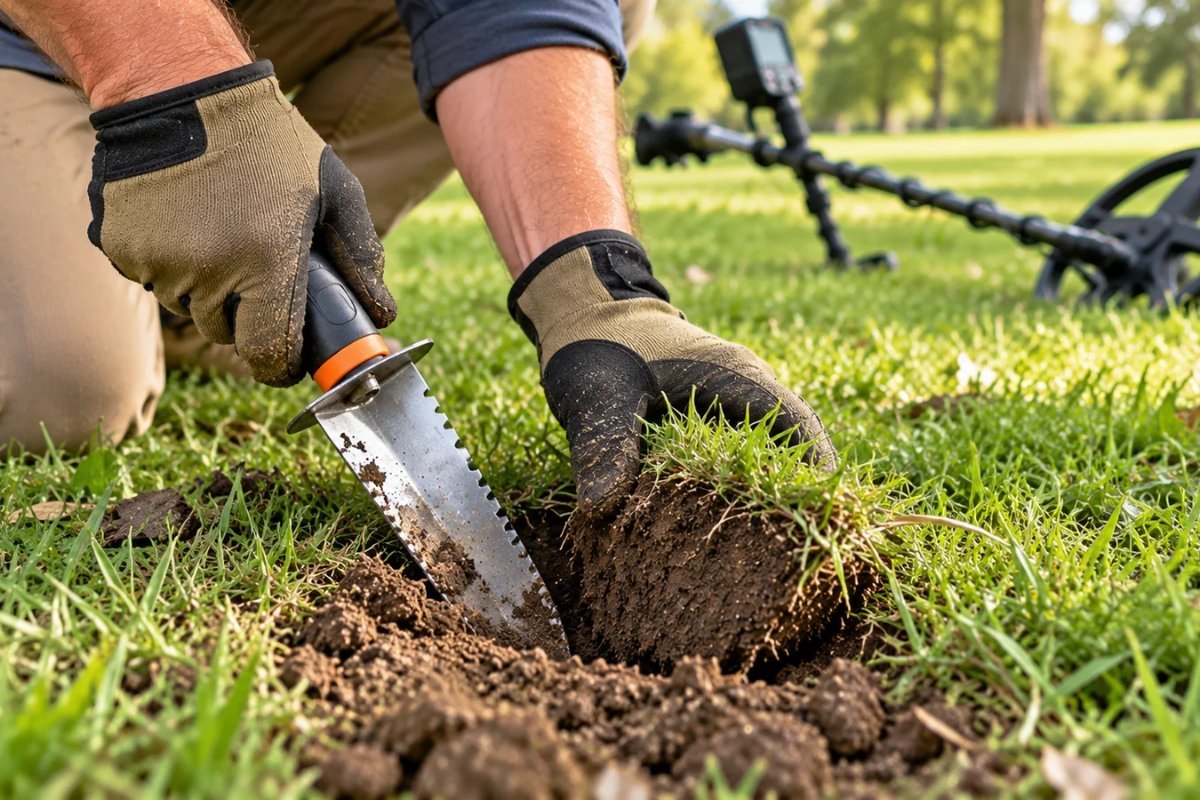
A good metal detecting shovel turns a beep into a recovered target without tearing up someone's lawn or costing you an afternoon on a single hard-packed hole. If you're headed to the beach instead, our sand scoop guide is the better starting point. This guide compares five shovels by blade material, edge type, and handle length to find the best pick for parks, yards, and open fields.
DetectorBrief is a participant in the Amazon Services LLC Associates Program, an affiliate advertising program designed to provide a means for sites to earn advertising fees by advertising and linking to Amazon.com.
Table of Contents
Quick picks
| Shovel | Length | Material | Best For |
|---|---|---|---|
| CKG Shovel with Sheath Knife (see details) | Hand trowel, ~12" | Stainless steel | Best overall |
| INCLY Shovel (see details) | Hand trowel, 11.6" | Alloy steel | Best budget |
| CKG Carbon Detecting Set (see details) | Spade + hand shovel | Carbon steel | Best premium set |
| GADFISH 40" Root Slayer (see details) | Full-length, 40" | Tempered steel | Best full-length |
| LRLXE Shovel (see details) | Hand trowel, 12.8" | Stainless steel | Best lightweight |
How to choose a digging tool for metal detecting
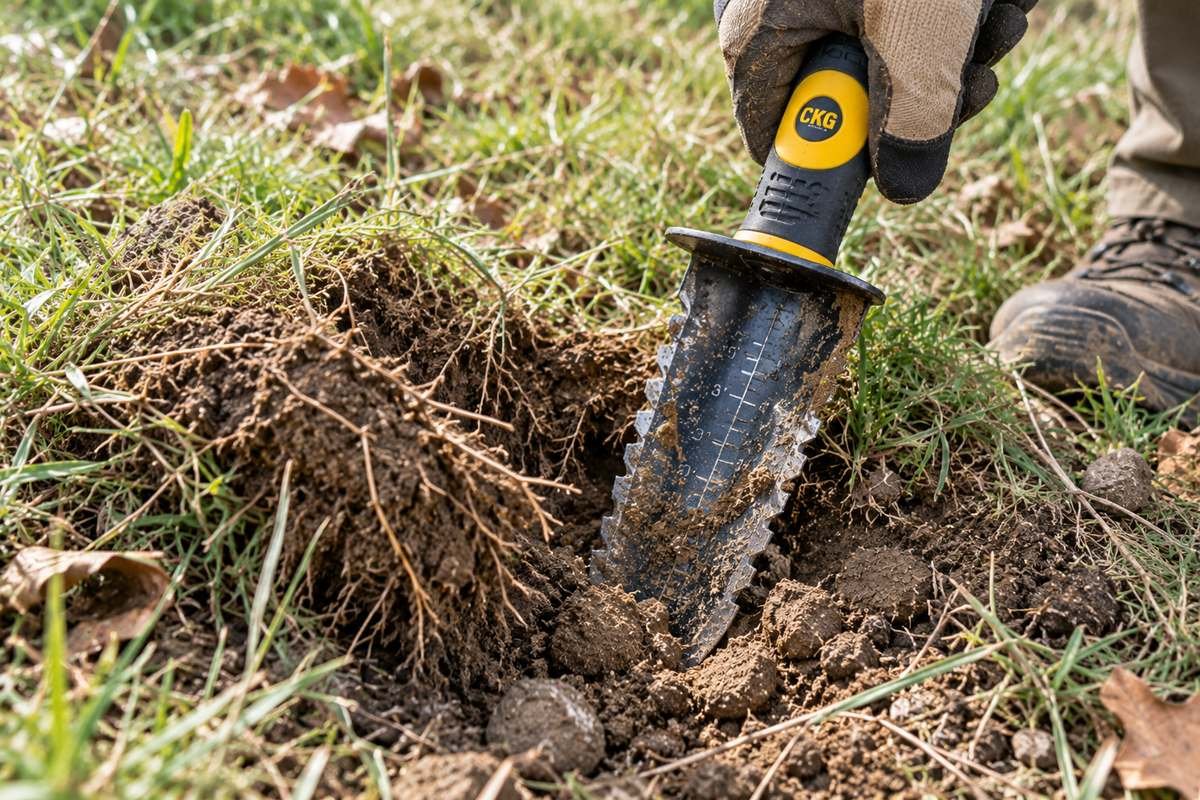
A metal detecting shovel has one job the average garden trowel doesn't: cut a clean, narrow plug around a target without shredding the turf or losing the signal in loose dirt. A few specs separate a purpose-built digger from a repurposed garden tool.
Blade material
Stainless steel resists rust and holds an edge through repeated digging with minimal maintenance, which suits most detectorists (people who hunt with metal detectors) working parks, fields, and yards. Carbon steel and tempered steel blades are harder and hold up better against rocky or root-packed ground, but they need occasional wipe-downs to keep rust off.
Serrated vs. plain edge
A serrated edge saws through roots, turf, and the occasional buried rope or root mat, so you don't have to pry or stomp your way through. A plain edge cuts a cleaner plug in soft, root-free soil, but it's the weaker choice anywhere grass roots or scrub are thick. Most dedicated detecting shovels ship serrated for exactly this reason.
Hand trowel vs. full-length shovel
A short hand trowel (10 to 13 inches) is the standard for most detecting because it cuts a small, precise plug and slips into a belt sheath between digs. A full-length shovel (30 to 40 inches) with a footstep or T-handle lets you stand up and drive the blade with your body weight. That matters for compacted soil, roots, or deeper targets where a hand trowel would wear you out fast.
Sheath and portability
A nylon or leather sheath with a belt loop keeps a hand trowel's edge from wearing through a bag and keeps the serrations away from your leg. It's a small detail, but it's the difference between a tool you carry clipped to your belt all day and one that stays in the car.
Shovel vs. trowel vs. knife
These three tools solve different problems, and most detectorists end up owning more than one. A hand trowel is the default for parks, yards, and typical fields, precise enough to cut a small plug. A full-length shovel is worth having on compacted ground, thick turf, or anywhere you are digging deeper than a trowel comfortably reaches, since you can drive it with your body weight instead of your arm. A digging knife, often built into a trowel's sheath, is for the last few inches of recovery work: cutting through a stubborn root, checking a plug by feel, or prying a target free without scratching it.
If you only buy one, a serrated hand trowel with a sheath knife covers the widest range of situations. Add a full-length shovel once you start hunting fields or older sites where targets tend to sit deeper.
Our 5 top picks for 2026
1. CKG Shovel with Sheath Knife: best overall
The CKG pairs a stainless steel, double-serrated trowel with a small fixed-blade knife built into the same sheath, which covers root-cutting and rope-cutting without adding a second tool to your belt. The non-slip handle holds up through repeated digs, and the reinforced neck between blade and handle is the part that usually fails first on cheaper shovels.
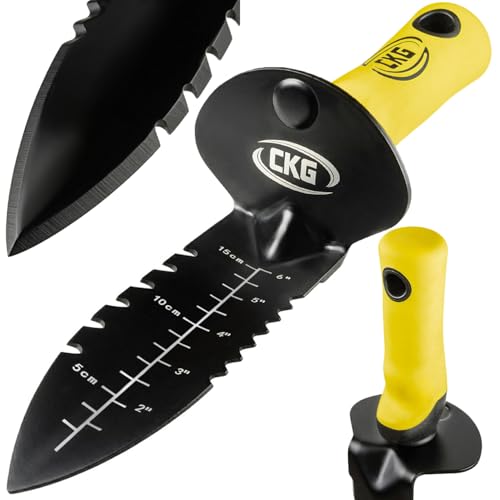
CKG Shovel with Sheath Knife
- Material
- stainless steel, double serrated edge
- Length
- hand trowel, about 12 inches, with sheath
Why we like it: the built-in sheath knife means you're not carrying a separate blade for roots and rope.
2. INCLY Shovel: best budget
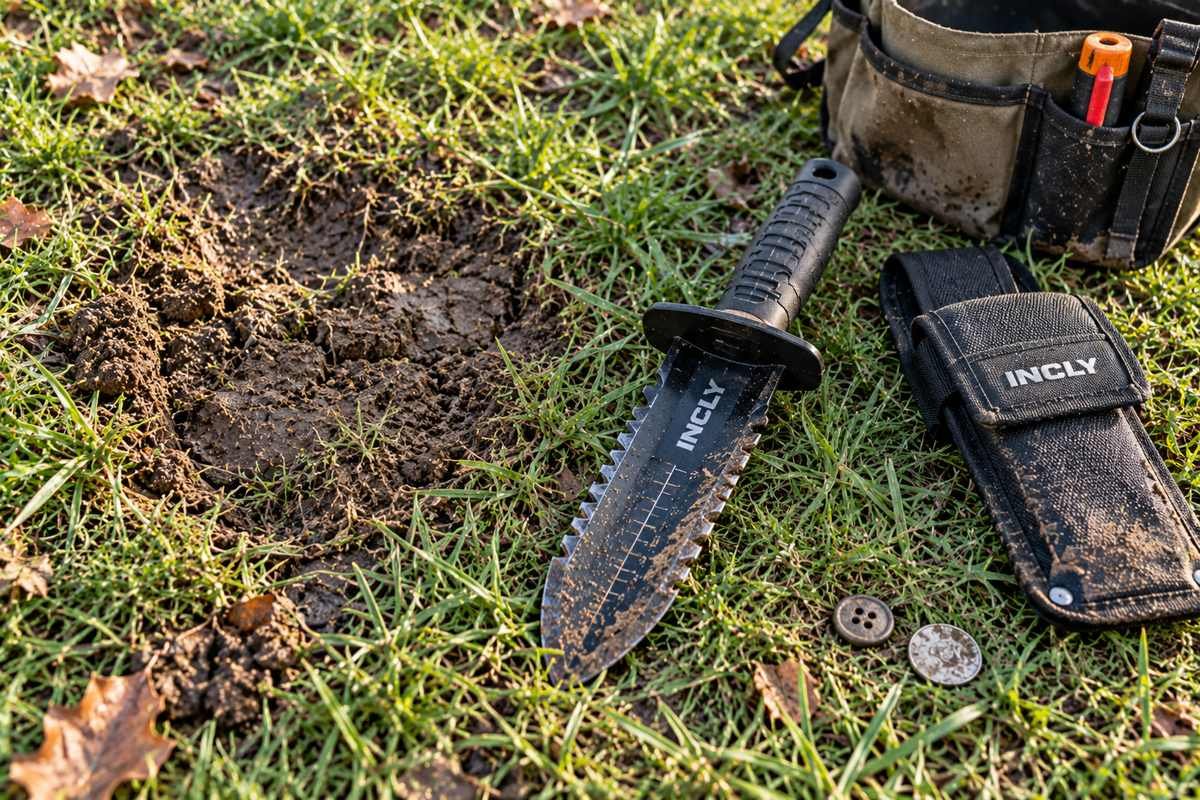
Budget priced and still double-serrated with a nylon sheath and belt loop, the INCLY is the shovel to start with if you're not sure how much you'll use one. The concave blade has inch and millimeter markings stamped into it, a useful detail for checking recovery depth against local digging guidelines.
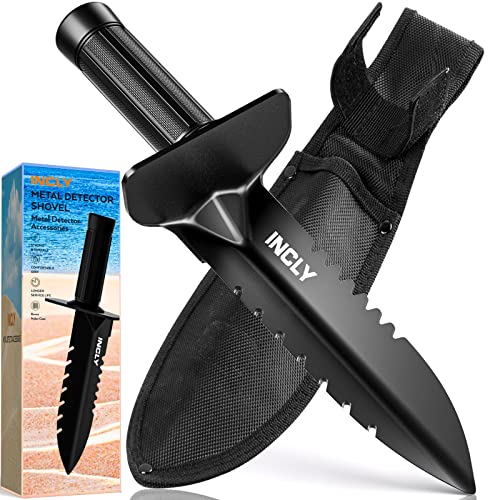
INCLY Shovel
- Material
- alloy steel, double serrated edge
- Length
- hand trowel, 11.6 inches, with sheath
Why we like it: the built-in inch and millimeter markings are a small touch most shovels at any price skip, and they're useful for tracking how deep you're digging.
3. CKG Carbon Detecting Set: best premium set
A carbon-handled spade shovel and a smaller hand shovel in one pouch, built for someone who wants a standing option and a hand trowel without buying them separately. The carbon handle keeps the full-size spade light enough to carry all day, and CKG rates the handle to support over 170 pounds of downward pressure for stubborn ground.

CKG Carbon Detecting Set
- Material
- carbon steel blade, carbon fiber handle
- Length
- spade shovel plus hand shovel, carry pouch included
Why we like it: getting a standing spade and a hand trowel in one matched set, in a single carry pouch, beats buying and carrying two mismatched tools.
4. GADFISH 40" Root Slayer: best full-length
At 40 inches with a T-handle and a footstep on the blade, this is the shovel for compacted fields, root-packed ground, or anywhere a hand trowel would leave you kneeling for an hour. The tapered, tempered steel head is built to punch through deep-rooted weeds and grass clumps rather than bounce off them.

GADFISH 40" Root Slayer
- Material
- tempered steel
- Length
- 40-inch full-length shovel, T-handle with footstep
Why we like it: the footstep design lets you drive the blade with your body weight instead of your arms, which matters on ground a hand trowel can't reach.
5. LRLXE Shovel: best lightweight
A compact trowel with a rubber handle. The ergonomic grip takes pressure off your wrist on a long session, and the nylon sheath and belt loop make it one of the more comfortable everyday-carry options here.

LRLXE Shovel
- Material
- stainless steel, double serrated edge
- Length
- hand trowel, 12.8 inches, with sheath
Why we like it: the rubber ergonomic handle is noticeably easier on the wrist than the hard plastic grips on most shovels in this price range.
Extra gear that pairs well with a shovel
- Pinpointer (a small handheld probe for finding a target in the dug hole), to confirm the target's exact spot in the plug before you widen the hole
- Finds pouch, so you're not setting targets down in the grass next to an open hole
- Knee pads, for anyone using a hand trowel for a full session
- Sand scoop, for beach and surf digs where a shovel isn't the right tool
Cutting a clean, small plug and pressing it back down afterward is the habit that keeps landowners and park managers willing to allow detecting. Leave No Trace's core principles are a good baseline, whether you're digging in a state park or someone's backyard with permission.
Digging technique by soil type
The right tool still needs the right approach once you are on your knees. In soft, root-free soil, a plain or lightly serrated edge cuts a clean circular plug on the first try, so keep the blade vertical and rock it gently rather than sawing. In turf and grass, cut a plug rather than a hole: slice a horseshoe or full circle around the signal, fold the sod back like a hinge, and dig inside it so the grass goes back down clean afterward.
A serrated edge matters most in ground full of roots. Saw through roots rather than prying against them, which is both faster and less likely to snap a blade tip. In hard-packed or rocky ground, a full-length shovel with a footstep lets you drive the blade with your weight instead of your arm. It is also worth loosening the top inch or two with the tip before trying to cut a full plug. Sandy or loose soil collapses easily, so dig a slightly wider hole than usual and work in short, shallow passes rather than one deep scoop that caves in on itself.
Frequently asked questions
What's the best metal detecting shovel for beginners?
A short hand trowel with a serrated edge and a belt sheath, in the 11 to 13 inch range. It's light, inexpensive, and handles most park and yard digging without the learning curve of a full-length shovel.
Do I need a serrated edge on a metal detecting shovel?
For most ground, yes. A serrated edge saws through grass roots and root mats instead of forcing you to pry through them, which is the difference between a clean plug and torn-up turf in most yards and parks.
How deep should I dig for a metal detecting target?
Most finds sit within 6 to 8 inches of the surface, and a hand trowel handles that range fine. Go deeper and a full-length shovel becomes worth carrying, both for less strain on your back and to keep the recovery hole narrow.
Will a metal detecting shovel damage my lawn?
Not if you cut a clean, narrow plug and press the turf back into place afterward instead of hacking a wide hole. A sharp, serrated blade makes this easier, which is part of why edge quality matters more than size for most digging.
Summary
For most people, the CKG with its built-in sheath knife is the right metal detecting shovel: serrated, stainless, and set up to handle roots and rope without a second tool. Step up to the GADFISH 40-inch if you're working compacted or root-heavy ground, or start with the INCLY if you want a reliable trowel to try the hobby.