

The metal detecting accessories worth buying first are a pinpointer, a sturdy digger, a finds pouch, and a pair of headphones. Those four change how many targets you recover and how fast you dig them. Everything else (coil covers, spare coils, wireless audio, a padded bag) is either comfort or protection, and can wait until you know how and where you like to hunt.
DetectorBrief is a participant in the Amazon Services LLC Associates Program, an affiliate advertising program designed to provide a means for sites to earn advertising fees by advertising and linking to Amazon.com.
This guide puts them in the order to buy them, covers what to check before you buy, and names a few that most new detectorists (people who hunt with metal detectors) don't need. It also links to our guides to pinpointers, sand scoops and shovels, which cover those tools in more detail.
Table of Contents
Metal detecting accessories at a glance
| Accessory | What it does | Priority |
|---|---|---|
| Pinpointer | Finds the target inside the hole so you dig less | Buy first |
| Digger or trowel | Cuts a clean plug in grass and dirt | Buy first |
| Finds pouch | Holds finds, trash and small tools on your belt | Buy first |
| Headphones | Brings out faint, deep signals and blocks wind and traffic | Buy first |
| Sand scoop | Sifts targets out of sand at the beach | Beach hunters |
| Rechargeable batteries | Cuts the cost of AA-powered detectors | Soon |
| Kneeling pad and gloves | Saves your knees and hands from glass and rusty iron | Soon |
| Coil cover | Protects the coil from scrapes and wear | Soon |
| Carry bag | Protects the detector in the car and on the trail | Later |
| Spare or different-size coil | Changes depth and how well you separate targets | Later |
| Wireless headphones | Removes the cable that snags on brush | Later |
The order to buy them in
Most beginner detector bundles include a few accessories, so check what came in your box before you buy anything. Then spend in this order.
Before your first hunt
A digger and a finds pouch are the bare minimum. You can't recover anything without the first, and without the second your pockets fill with pull tabs. Use any wired headphones you already own until you're sure you'll keep detecting. If your detector came without headphones, a budget set is fine to start.
In the first month
Buy a pinpointer. It's the single biggest upgrade most new detectorists make, because it turns a 10-minute search of a hole into a 30-second one. Add a kneeling pad and a pair of gloves once you've spent a few afternoons on your knees in someone's lawn.
Once you know where you hunt
Now buy for your ground. Beach hunters need a sand scoop. Park and yard hunters get more from a smaller coil, which handles ground with a lot of trash. People who drive to sites want a padded bag. This is also when dedicated detector headphones or a wireless setup start to make sense.
What a full starter kit of accessories includes
Here's what the four essentials look like, using the picks in this guide and in our roundups. The budget column still gets you a working kit.
| Item | Budget route | Our picks |
|---|---|---|
| Pinpointer | A basic pinpointer | Garrett Pro-Pointer AT |
| Digger | A serrated hand trowel | CKG Shovel with Sheath Knife |
| Finds pouch | A one-pocket pouch | Two-pocket finds pouch |
| Headphones | Earbuds or headphones you own | Garrett MS-2 |
If money is tight, put it into the pinpointer first. A cheap digger and a pouch from the hardware store work fine, but a weak pinpointer that misses targets or eats batteries will slow you down every hole.
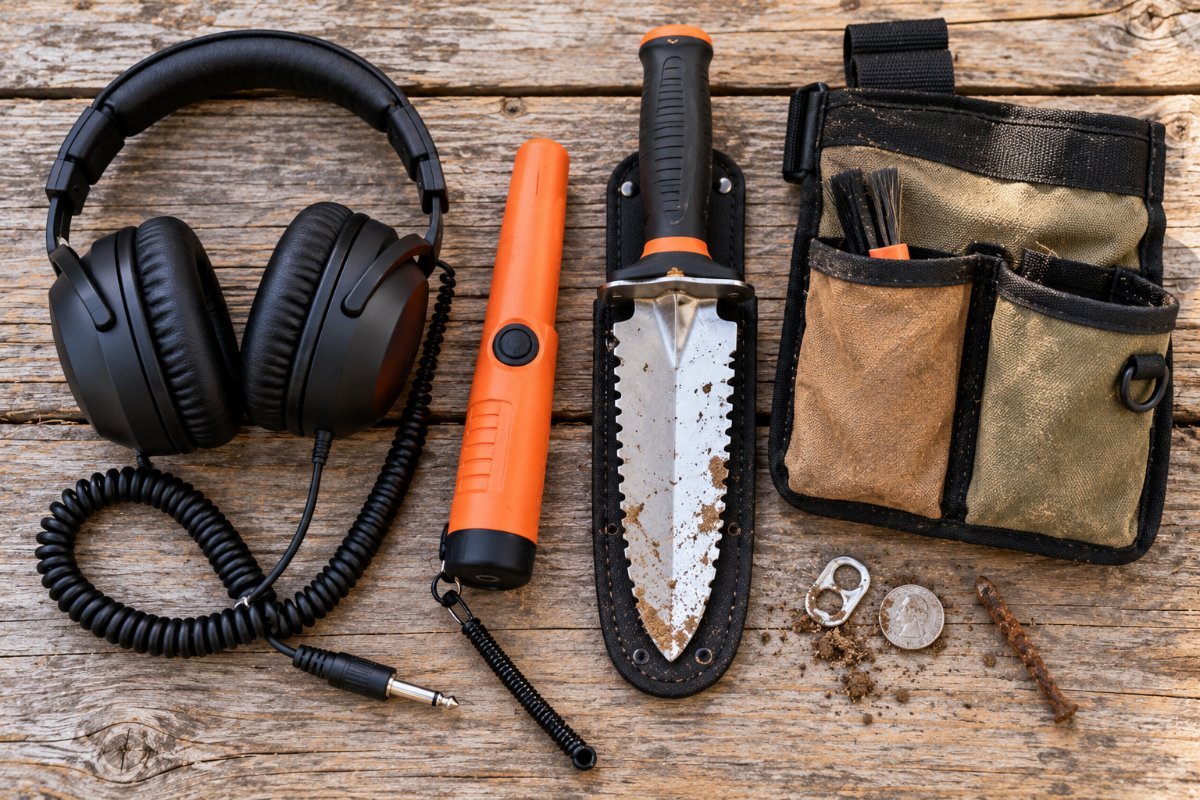
Headphones
Headphones get overlooked more than any other accessory. They do two jobs. They let you hear faint signals that the speaker drowns out in wind, surf, or traffic, and they keep the beeping from bothering everyone in the park. Most detectors have a headphone jack, but the plug size varies. Many take a 1/4 inch plug, others a 3.5mm, so check yours and buy an adapter if needed. Our guide to metal detector headphones lists the jack on popular detectors and compares wired, wireless and waterproof picks.
Dedicated detector headphones are tougher than music headphones and have a volume knob on the cup, which helps when your detector's own volume is buried in a menu. The Garrett MS-2 Headphones are a good example: a 1/4 inch right-angle plug, a volume control on the headphones, and a reinforced 10-foot coiled cable that survives being stepped on.
Wired vs wireless
Regular Bluetooth headphones can add a delay between your sweep and the tone, and on a detector that delay makes pinpointing by ear harder. That's why detector makers sell their own low-latency wireless systems, like Garrett's Z-Lynk. If your detector supports one, it's a nice upgrade. If not, stay wired.
Pinpointer
A pinpointer is a small handheld probe that beeps or vibrates as it gets close to metal. Your detector tells you roughly where the target is. The pinpointer tells you exactly where it is in the plug or the hole, so you dig smaller holes and stop slicing coins in half with your digger.
Our pinpointer roundup compares the main options. The Garrett Pro-Pointer AT is our top pick there, and it's the one to buy if you'll ever hunt wet sand or shallow water, since it's waterproof to 20 feet.
Digging tools and sand scoops
In grass and dirt, you need a digger with a sharp, serrated edge that cuts roots and lets you lift a neat plug you can flip back into place. A full-length shovel saves your back on deep relic targets, but most park and yard hunters do fine with a hand digger. Our metal detecting shovel guide covers both, with the CKG Shovel with Sheath Knife as the top pick.
At the beach, a scoop replaces the digger. Stainless steel lasts longer and cuts through packed wet sand, while plastic is lighter for dry sand. See our sand scoop guide for the GADFISH scoop and the long-handled options for working in the surf.
Finds pouch, and why you need two pockets
A finds pouch clips to your belt and holds what you dig. The useful ones have two separate pockets, one for keepers and one for trash, plus a holster for your pinpointer and loops for a digger. Packing out the trash you dig up keeps landowners happy and means you won't dig the same pull tab twice next week.
The Metal Detecting Finds Bag Waist Digger Pouch has a pinpointer holder and drain holes that let water and sand out. It has a compact 8.2 by 3.9 by 11.8 inch body that stays out of the way while you swing.
Batteries and power
Many entry-level detectors and pinpointers run on AA or 9-volt batteries, and a regular hunter goes through a lot of them. Low self-discharge rechargeable AAs pay for themselves quickly. The Panasonic eneloop AA 8-Pack is rated for up to 2,100 charge cycles and holds its charge in a drawer. So the spare set in your pouch is still full when you need it.
If your detector has a built-in lithium battery, the accessory to carry is a small USB power bank and the right cable. Check the charging port first. Some detectors use a magnetic or proprietary charging clip, and losing it can end a weekend trip.
Coil covers and spare coils
A coil cover (sometimes called a skid plate) is a snap-on plastic shell that takes the scrapes instead of your search coil. It costs little, and a replacement coil costs far more. Buy one made for your exact coil model and size, because a loose cover rattles and can cause false signals.
Take it off every so often and rinse out the dirt and sand that build up between the cover and coil. Packed grit adds weight, wears the coil, and can make some machines noisy.
A second coil is a later purchase. A smaller coil (often 5 to 6 inches) separates good targets from nearby trash in parks and old homesites. A larger coil covers more ground and can reach a little deeper in open, clean fields. Only buy coils made for your detector model, since they aren't interchangeable between brands.
Comfort gear: knees, hands, and arms
You'll spend more time kneeling than swinging on a good site. A thick foam pad makes a real difference after a couple of hours. The WORKPRO Extra Thick Kneeling Pad is waterproof NBR (nitrile rubber) foam that wipes clean, and it doubles as a seat on a long beach day.
Gloves protect you from broken glass, rusty nails, and fishhooks hiding in the dirt. Any snug work glove with a cut-resistant liner works. Thin gloves make it easier to pick small targets out of a plug than bulky leather ones.
If your arm gets tired before you're ready to stop, look at an arm-cuff pad or a bungee harness that takes the weight of a heavier detector off your forearm. Most detectors under four pounds don't need one.
Carry bag
A padded bag protects the control box and coil when the detector rides in a trunk or pickup bed, and it keeps the shaft and coil together so you don't leave anything behind. The Minelab Padded Reinforced Canvas Carry Bag is sold as fitting all metal detectors, not just Minelab's. Check the bag's length against your detector with the shaft collapsed before you order.
Extra accessories for beach and water hunting
Saltwater and sand are hard on gear. Beyond a scoop and a waterproof pinpointer, beach hunters should rinse everything in fresh water after each trip, carry a mesh-bottom finds bag that lets sand fall through, and use headphones rated for the depth they'll wade to. Standard headphones aren't waterproof, even if the detector is. Our guides to beach detectors and underwater detectors cover which machines can go in the water.
Metal detecting accessories by type of hunt
The essentials stay the same, but what you add next depends on where you swing.
| Where you hunt | Add these | Why |
|---|---|---|
| Parks and yards | Small coil, kneeling pad, two-pocket pouch | A lot of trash close together, and lawns where you need neat plugs |
| Dry and wet beach | Stainless sand scoop, mesh finds bag, waterproof pinpointer | Sand needs sifting, and saltwater kills unsealed gear |
| Wading and shallow water | Long-handled scoop, waterproof headphones | Standard headphones fail the moment they get wet |
| Farm fields and relic sites | Full-length shovel, larger coil, gloves | Deeper targets, open ground and rusty iron |
| Gold country | Small coil, pick, and a pan for testing samples | Small nuggets in mineralized ground. See our gold panning supplies guide |

Metal detecting accessories you can skip
- Huge all-in-one accessory kits with a dozen items. You end up with a weak digger, a pouch with one pocket, and headphones you'll replace. Buy the four essentials separately instead.
- Dedicated GPS units. A free phone app that drops a pin works for marking productive spots and permission boundaries.
- Gold test kits and acid sets for your first year. You're far more likely to find pull tabs, clad coins, and costume jewelry than anything that needs testing at home.
- Coin cleaning kits for old coins. Scrubbing or polishing an older coin strips its surface and lowers its value to collectors. Rinse it in plain water and leave it alone until you know what it is.
The free accessories: permission and old maps
The most useful items in a detectorist's kit don't cost anything. The first is permission. Ask landowners before you hunt private land, and check the rules for any public site. National parks are off-limits, since federal rules at 36 CFR 2.1 (part of the Code of Federal Regulations) prohibit possessing or using a metal detector in park areas. Many state parks and local parks have their own permit or zone rules.
The second is old maps. The USGS topoView archive, from the U.S. Geological Survey, has historical topographic maps going back to the late 1800s, which show old homesites, schools, churches, and roads that no longer appear on a modern map. Compare an old sheet with today's satellite view and you've got a short list of places where people used to drop things.
Gear for this guide5 items

Headphones
Garrett MS-2 Headphones
1/4 inch plug, volume control on the cup and a 10-foot coiled cable
Check Price on Amazon
Finds pouch
Metal Detecting Finds Bag Waist Digger Pouch
Pinpointer holder and drain holes for water and sand
Check Price on Amazon
Batteries
Panasonic eneloop AA 8-Pack
Low self-discharge AAs rated for up to 2,100 charge cycles
Check Price on Amazon
Kneeling pad
WORKPRO Extra Thick Kneeling Pad
Waterproof foam that wipes clean and doubles as a seat
Check Price on Amazon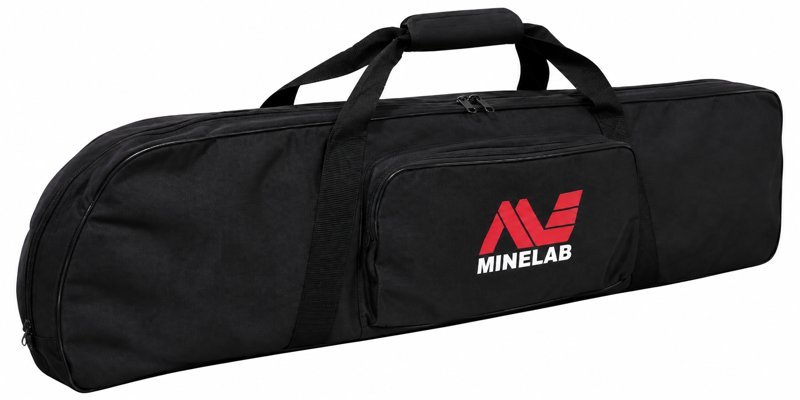
Carry bag
Minelab Padded Reinforced Canvas Carry Bag
Padded and sold as fitting all detectors. Check the length first
Check Price on AmazonFrequently asked questions
What accessories do I need for metal detecting?
Start with a digger, a finds pouch, headphones and a pinpointer. Add a sand scoop if you hunt beaches, then a kneeling pad, gloves and rechargeable batteries. Coil covers, spare coils, wireless audio and a padded bag can wait until you know where you hunt.
Do you need headphones for metal detecting?
Not strictly, but they help a lot. Headphones let you hear faint, deep signals over wind, surf, and traffic, and they keep the tones from bothering people nearby. Check whether your detector uses a 1/4 inch or 3.5mm plug.
Is a pinpointer worth it for beginners?
Yes. It is the biggest single upgrade most beginners make, because it finds the target in the hole in seconds, so you dig smaller holes and damage fewer finds.
Can I use Bluetooth headphones with a metal detector?
Regular Bluetooth headphones can add a delay between the sweep and the tone, which makes pinpointing by ear harder. Detector makers sell their own low-latency wireless systems, so use one of those if your detector supports it, or stay wired.
Do I need a coil cover?
It is a cheap way to protect an expensive search coil from scrapes. Buy one made for your exact coil, and rinse out trapped dirt and sand now and then, since packed grit can cause noise on some detectors.
What to Buy First
Good metal detecting accessories make you faster in the field. Spend first on the tools that recover targets (a digger, a pinpointer, and a two-pocket finds pouch) plus headphones, then add comfort gear and protection as your hunts get longer. Skip the big bundled kits, leave old coins uncleaned, and get permission before you dig.