

The best metal detector for gold is not the same machine that finds coins in a park. Gold nuggets are small, often just flecks and grains, and they hide in mineralized (full of natural minerals that can confuse a detector) soil that makes ordinary detectors chatter and false-signal. You need higher frequency, proper ground balancing, and the patience to swing slowly. Where the ground is too noisy to detect at all, a gold pan lets you work the same creek gravel by hand.
DetectorBrief is a participant in the Amazon Services LLC Associates Program, an affiliate advertising program designed to provide a means for sites to earn advertising fees by advertising and linking to Amazon.com.
If you are new to detecting in general rather than gold specifically, start with our guide to the best metal detector for beginners. Below are six detectors built or well suited for gold prospecting, from a budget nugget hunter to a fully waterproof multi-purpose machine. Every frequency, weight and depth figure comes from the maker's own listing. We have not run these six side by side, so treat this as a spec-based shortlist, and read how we research if you want the details.
Table of Contents
Quick picks: the best metal detector for gold
| Detector | Frequency | Waterproof | Weight | Best for |
|---|---|---|---|---|
| Fisher Gold Bug Pro (see details) | 19 kHz | No | 2.9 lbs | Budget nugget hunting |
| Garrett AT Gold (see details) | 18 kHz | Yes, submersible to 10 ft | 3.03 lbs | Wash and creek prospecting |
| Minelab Gold Monster 1000 (see details) | 45 kHz | Coils only | 2.94 lbs | Beginners, automatic ground balance |
| Garrett Goldmaster 24k (see details) | 48 kHz | No | 2.9 lbs | Fine and small gold |
| Minelab Equinox 900 (see details) | Multi-frequency | Yes, submersible to 16 ft | 2.96 lbs | Gold plus general detecting |
| Minelab SDC 2300 (see details) | Pulse induction | Yes, submersible to 10 ft | ~4.4 lbs | Serious/professional prospecting |
How to choose a metal detector for gold
VLF vs. PI, and why most hobbyists want VLF
Gold detectors split into two technologies. Five of the six machines on this list are VLF (very low frequency) detectors. They are lighter, cheaper, and give a target ID tone that helps you skip trash before you dig. PI (pulse induction) detectors like Minelab's GPZ and GPX series reach deeper and handle mineralized ground better. But they cost several times more and give no discrimination (a setting that ignores signals from metals you don't want, like iron) at all. For a first gold detector, VLF is the practical choice.
Frequency matters more here than anywhere else
Gold nuggets are small and low in conductivity (how easily a metal carries electric current), so higher operating frequencies pick them up better than the 5 to 15 kHz range used on most all-purpose detectors. That is why the single-frequency VLF picks here run from 18 kHz up to 48 kHz. A higher number isn't automatically better, since it also means more sensitivity to hot rocks (mineralized stones that give false signals) and mineral noise, but for tiny gold it is the right trade.
Ground balance matters most
Gold-bearing ground is almost always mineralized, and mineralized soil makes a detector chatter or mask real signals unless it is balanced to that ground. Automatic ground balance, which the Gold Monster 1000 uses, does this for you continuously. Manual ground balance on the Gold Bug Pro and Goldmaster 24k takes more practice but gives experienced hunters finer control in patchy ground.
Weight and balance for all-day swinging
Nugget hunting means slow, overlapping swings for hours, often on uneven ground. Every VLF detector on this list weighs under 3.1 pounds bare, which matters more here than in park or beach detecting where you cover ground faster and rest the coil less.
Waterproof coils for wash prospecting
Gold collects in creek beds, dry washes, and shallow water where it settles with other heavy material. A fully submersible detector like the AT Gold or Equinox 900 lets you work the edges of water without stopping. A coils-only waterproof design like the Gold Monster 1000 still lets you sweep wet ground and shallow puddles, just not the control box itself. A detector finds the bigger pieces, and a sluice catches the fine gold a detector misses. Our guide to the best sluice box for gold shows how to pick one and set it up.
The 6 best metal detectors for gold
1. Fisher Gold Bug Pro: best budget nugget hunter
The Fisher Gold Bug Pro runs at 19 kHz with real-time ground balancing and a ground condition readout, so you can see how mineralized the dirt is before you start swinging. Fisher's V-Break tone discrimination lets you set a breakpoint between the tones you want to hear and the ones you want to ignore, which cuts down on digging trash while you learn the machine.
At 2.9 pounds, it swings all day, and the price makes it the easiest way to try gold prospecting without committing to a premium gold machine. The trade-off is no waterproofing, so it suits dry ground rather than wading a creek.

Fisher Gold Bug Pro
- Frequency
- 19 kHz
- Weight
- 2.9 lb
- Waterproof
- No
Good for: trying gold prospecting without committing to a pricier machine.
Skip if: you want to wade creeks. It is not waterproof.
Pros
- Real-time ground balance with a ground readout
- V-Break tone discrimination cuts down on digging trash
- Light enough to swing all day
Cons
- Not waterproof, so it suits dry ground
2. Garrett AT Gold: best for wash and creek prospecting
The Garrett AT Gold runs at 18 kHz and is fully submersible, so you can work a creek bed or wash without worrying about the control box. It has a true all-metal mode (signals on every metal, with no filtering) for maximum depth and sensitivity, plus a Ground Balance Window that handles patchy mineralization better than a single-point balance.
Garrett includes its Pro-Pointer AT pinpointer in the box, which is handy since you will want a pinpointer for gold work anyway. Iron Audio tells you when a signal is ferrous before you dig, which saves time in ground with a lot of trash or minerals.

Garrett AT Gold
- Frequency
- 18 kHz
- Waterproof
- Fully submersible
- In the box
- Pro-Pointer AT pinpointer
Good for: working creek beds and washes without worrying about the control box.
Pros
- True all-metal mode for depth and sensitivity
- Ground Balance Window handles patchy ground
- Iron Audio flags ferrous targets before you dig
3. Minelab Gold Monster 1000: best for beginners
The Minelab Gold Monster 1000 runs a 45 kHz VLF signal with a 24-bit processor and handles ground balance, sensitivity, and noise cancel automatically. That means less setup and less guesswork than the manual-balance detectors on this list, which is why Minelab and most reviewers pitch it at first-time gold hunters.
It ships with two waterproof DD coils (a common coil design with two D-shaped windings): a 10 x 6 inch for ground coverage and depth, and a 5 inch for tight spots, areas with a lot of trash, and fine pinpointing. The control box isn't submersible, so it is built for wet ground and shallow water rather than full wading.
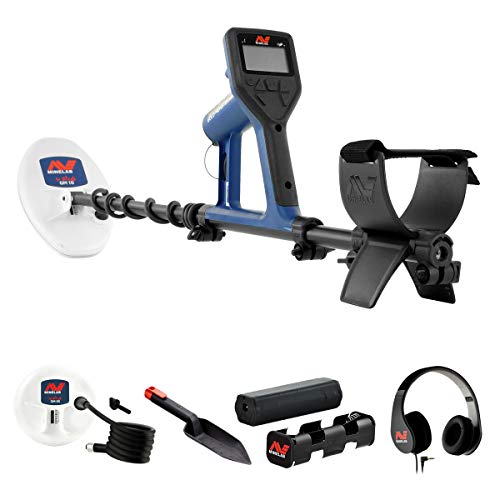
Minelab Gold Monster 1000
- Frequency
- 45 kHz
- Coils
- 10 x 6 in and 5 in DD
- Setup
- Automatic
Good for: first-time gold hunters who want less setup and less guesswork.
Skip if: you want to wade fully. The control box is not submersible.
Pros
- Automatic ground balance, sensitivity and noise cancel
- Two waterproof coils in the box
Cons
- Control box is not submersible
4. Garrett Goldmaster 24k: best for fine and small gold
The Garrett Goldmaster 24k operates at 48 kHz, the highest frequency on this list, giving it strong sensitivity to tiny flakes and sub-gram nuggets that lower-frequency detectors miss entirely. It is built and assembled in the USA and comes with wired headphones for critical listening in the field.
That high frequency comes with the usual trade-off: more chatter in hot rocks and heavily mineralized ground, so it rewards a hunter willing to learn ground balance rather than lean on full automation. It is not waterproof, so plan on dry-ground and streambank hunting rather than wading.
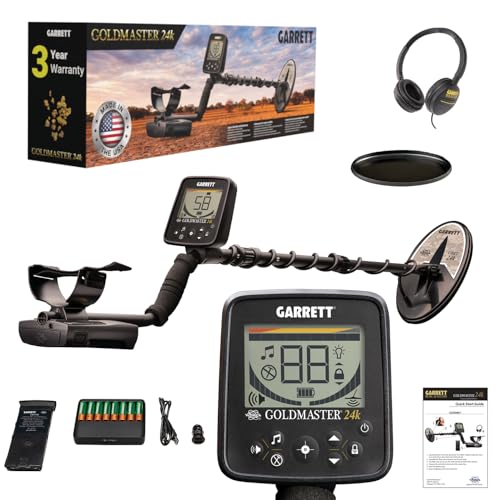
Garrett Goldmaster 24k
- Frequency
- 48 kHz
- Waterproof
- No
- Extras
- Wired headphones
Good for: tiny flakes and sub-gram nuggets that lower frequencies miss.
Skip if: you want full automation. It rewards learning ground balance.
Pros
- Highest frequency on this list
- Built and assembled in the USA
- Headphones included
Cons
- More chatter in hot rocks and mineralized ground
- Not waterproof
5. Minelab Equinox 900: best multi-purpose
The Minelab Equinox 900 is not a dedicated gold machine, but its Multi-IQ technology runs up to 5 frequencies simultaneously and includes a dedicated Gold mode alongside Park, Field, and Beach modes. If you want one detector for gold prospecting, coin and relic hunting, and beach trips, this is the one on this list built for all of it.
It is fully waterproof to 16 feet, so it handles creek wading the same as park sweeps. It will not out-hunt a dedicated high-frequency machine like the Goldmaster 24k on the smallest flakes, but for a hunter who wants one detector for everything, it is the practical choice.

Minelab Equinox 900
- Frequency
- Multi-IQ, up to 5 at once
- Waterproof
- To 16 ft
- Modes
- Gold, Park, Field, Beach
Good for: one detector for gold, coins, relics and beach trips.
Skip if: you only chase the smallest flakes. A dedicated high-frequency machine does better.
Pros
- Dedicated Gold mode
- Waterproof for creek wading
Cons
- Will not beat the Goldmaster 24k on the smallest flakes
6. Minelab SDC 2300: best pulse induction for serious prospecting
Every other pick on this list is a VLF machine. The Minelab SDC 2300 uses pulse induction, the technology serious and professional prospectors reach for once they outgrow a VLF detector's limits. PI ignores hot, heavily mineralized ground almost completely. It keeps hunting cleanly in soil that would have a VLF machine chattering nonstop. It also digs deeper on the same small nuggets that VLF struggles to separate from ground noise.
The tradeoff is the one PI always makes: little to no target discrimination, so you dig everything the coil flags, and a big price jump over the VLF picks above. It also folds down small enough for a carry-on and is fully submersible to 10 feet, so it doubles as a wading machine for gold-bearing creek beds. This is not a first detector. It is the one you buy after a VLF machine has shown you where the gold is and you are ready to chase what it could not reach.

Minelab SDC 2300
- Technology
- Pulse induction
- Waterproof
- To 10 ft
- Folds
- Small enough for a carry-on
Good for: serious prospectors who have outgrown a VLF detector.
Skip if: this is your first detector.
Pros
- Close to immune to hot, mineralized ground
- Digs deeper on small nuggets than VLF
- Doubles as a wading machine
Cons
- Little to no discrimination, so you dig everything
- A big price jump over the VLF picks
Why we like it: it is close to immune to the mineralized, hot ground that trips up every VLF detector on this list. That is exactly the problem serious prospectors run into once they have worked an area with a VLF machine for a while.
What else you need for gold prospecting

- Pinpointer: narrows a signal down to the exact spot in the hole instead of digging blind.
- Gold pan: for checking dug material and working stream gravel by hand.
- Classifier (a sieve that screens out larger rocks) or mini sluice: sifts out large rocks so you can pan the fine material faster.
- Snuffer bottle or vial: for collecting the small flakes and grains once you find them.
Where you can and can't prospect for gold
Most national forest land in the western United States allows casual, non-mechanized gold prospecting under the General Mining Law, but active mining claims are private and off-limits even on public land. National parks, monuments, and most state parks prohibit metal detecting and prospecting entirely. Always check with the local Bureau of Land Management (BLM) field office or park land manager before you dig, and never detect on a claim without the claim holder's permission.
FAQ
What frequency is best for gold detecting?
Higher is generally better for gold. Most dedicated gold detectors run between 18 kHz and 48 kHz, well above the 5 to 15 kHz used on general-purpose detectors, because small, low-conductivity nuggets respond better to higher frequencies.
Can a regular metal detector find gold?
A general-purpose detector can find larger nuggets, but it will miss small flakes that a higher-frequency, gold-specific detector like the Gold Monster 1000 or Goldmaster 24k would catch. A multi-purpose detector with a dedicated gold mode, like the Equinox 900, is a middle ground.
Do I need a waterproof detector for gold prospecting?
Only if you plan to work in or right at the water. A fully submersible detector lets you wade creek beds and washes, while a coils-only waterproof design still handles wet ground and shallow puddles without full wading.
Where can I legally prospect for gold?
Most national forest land in the western United States allows casual, non-mechanized prospecting under the General Mining Law, but active claims, national parks, and most state parks are off-limits. Always confirm with the local Bureau of Land Management (BLM) field office or land manager first.
Which One to Buy
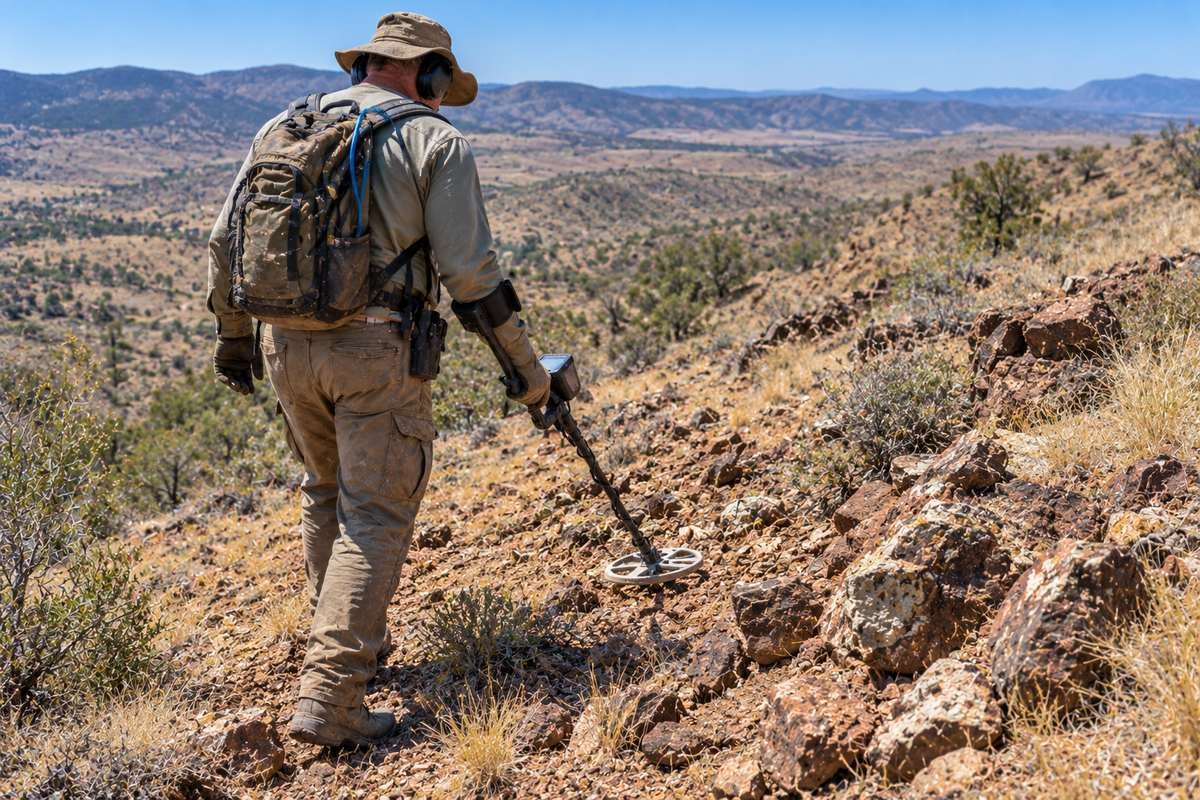
For most beginners, the Minelab Gold Monster 1000 is the easiest way to start finding gold and our pick for the best metal detector for gold overall, since it handles ground balance automatically. If budget is the deciding factor, the Fisher Gold Bug Pro is the most affordable pick here. If you want one machine that also works as a general-purpose detector, the Equinox 900 covers gold and everything else. Once you dig up a find, our guide on how to tell if gold is real shows how to rule out pyrite.