

If you have shopped for a metal detector, you have probably seen the term "pulse induction." You'll see it on expensive gold detectors. It shows up on waterproof beach machines. It also shows up in forum arguments about which detector is really the best. For a new detectorist (a person who hunts with a metal detector), this can be confusing. Does your detector use it? Should your next one?
This guide explains what a pulse induction metal detector does. It explains how pulse induction differs from the VLF technology most detectors use, and where it genuinely helps. It also covers what you can expect to pay, since pulse induction detectors cost much more than the VLF models most hobbyists start with. If you want to understand how a standard VLF detector works first, read our how metal detectors work guide.
Table of Contents
What Pulse Induction Means
Every metal detector sends a changing magnetic field into the ground and reads what comes back. A pulse induction detector, usually shortened to PI, does this with short bursts of electrical current instead of a steady signal.
Here is the basic process. The search coil sends a strong, brief current pulse. That pulse creates a magnetic field. When the pulse shuts off, the field collapses almost instantly. If a metal object is nearby, the collapsing field induces a small electrical current within the metal. This is called an eddy current. The eddy current creates its own tiny magnetic field, and that field makes the signal in the coil fade more slowly than normal. The detector's receiver listens for that slower fade. If it hears one, there is metal nearby (source: Element14 Community, pulse induction circuit explainer). The detector repeats this cycle hundreds of times every second. Kellyco reports that the Garrett ATX, for example, sends about 730 pulses per second.
The key difference from other detector types is what the machine measures. A pulse induction detector does not compare two coils in real time. It measures how long a decay signal lingers after each pulse. That one difference is what gives PI technology its particular strengths and weaknesses, covered below.
How Pulse Induction Differs From VLF
VLF, short for Very Low Frequency, is the technology used in most metal detectors sold today. That includes every detector in our beginner and kids buying guides. A VLF detector uses two coils. One is a transmitter coil that sends a steady signal. The other is a receiver coil that listens for changes caused by nearby metal. By comparing the two signals, a VLF detector can estimate a target's conductivity (how easily a metal carries electric current). That is how it tells you whether you likely found a coin, a ring, or a rusty nail before you ever dig.
A pulse induction metal detector reads a decay curve instead of comparing two continuous signals. A prospecting guide written by the dealer Kellyco and published by the Gold Prospectors Association of America says PI machines do better than VLF in most highly mineralized (full of natural minerals that can confuse a detector) soils. The same guide adds that a well set up VLF can still reach good depth, so VLF is not a shallow-only tool (source: Gold Prospectors Association of America, A Guide to Prospecting).
The tradeoff is that a PI detector usually cannot tell you much about what kind of metal it found. Kellyco's overview of detector technologies puts it simply: a basic PI machine tells you a target is there, but not what it is. Some PI models add limited iron checks, covered below. The next two sections explain where that tradeoff is worth accepting.
Where Pulse Induction Detectors Win
Mineralized and "Hot" Ground
Soil that is naturally rich in iron minerals is called hot ground. It is a known weak spot for VLF detectors. The iron particles create a background signal that can mask or mimic real targets. This reduces a VLF detector's usable depth and accuracy. A pulse induction metal detector is far less affected by this. The Gold Prospectors Association of America (GPAA) prospecting guide credits this to the way PI measures how fast signals fade after each pulse.
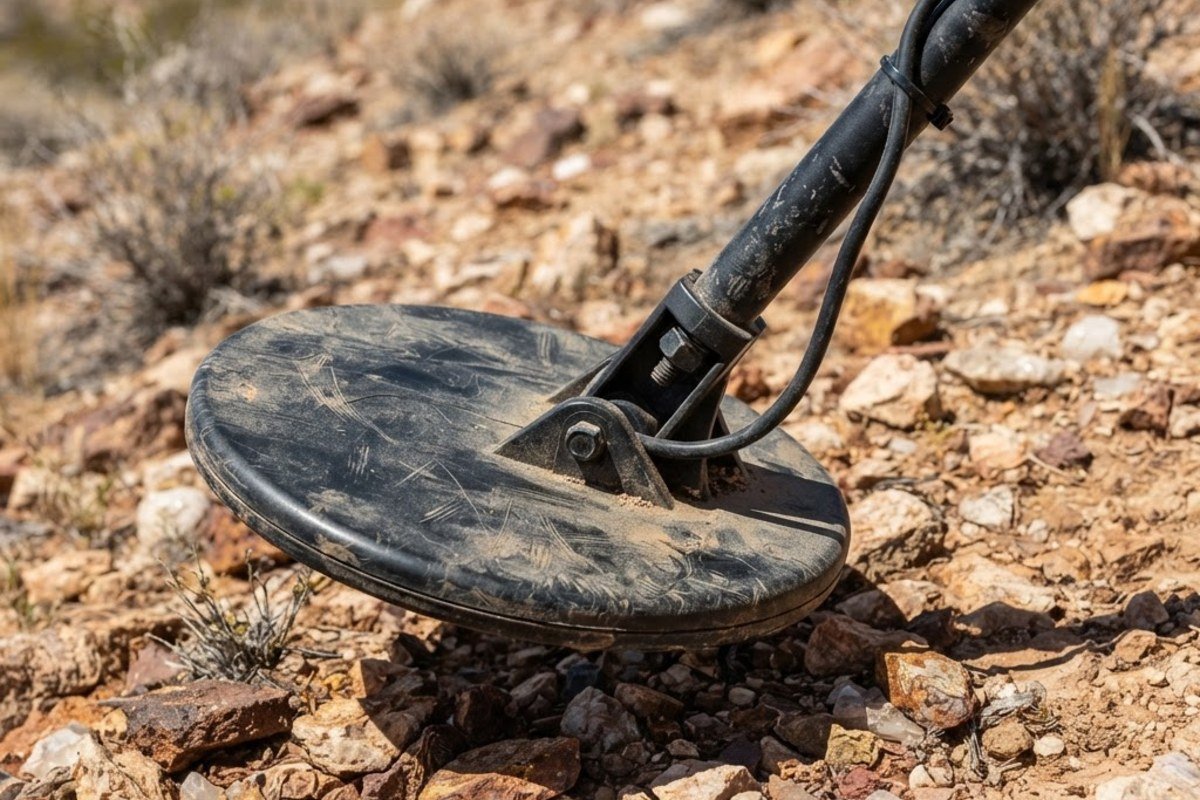
Garrett's own manual for its ATX pulse induction detector says the machine offers "inherent immunity to most normal soil minerals" (source: Garrett ATX owner's manual). A field test by Kellyco writer Eric Reed backs this up. He ran a Garrett ATX against two VLF detectors in some of the most heavily mineralized red clay in central Virginia. The ATX handled the ground well, while both VLF machines lost a lot of depth and gave inconsistent signals. His conclusion was that a PI detector will consistently do better in mineralized ground (source: Kellyco, comparing VLF and PI metal detectors in hot, mineralized soil).
This is why many serious gold prospectors move up to pulse induction once they work heavily mineralized ground. Our best metal detector for gold guide includes one PI pick, the Minelab SDC 2300, alongside VLF detectors that suit milder ground. Gold country is often mineralized ground.
Saltwater and Wet Sand
Saltwater creates a similar problem to mineralized soil. The dissolved salt conducts electricity. That can overwhelm a VLF detector's ability to separate a real target from background noise. A pulse induction detector handles this much better. Kellyco's comparison describes PI detectors as stable and reliable at finding targets even in salty beach water and sand (source: Kellyco, comparing VLF and PI metal detectors in hot, mineralized soil).
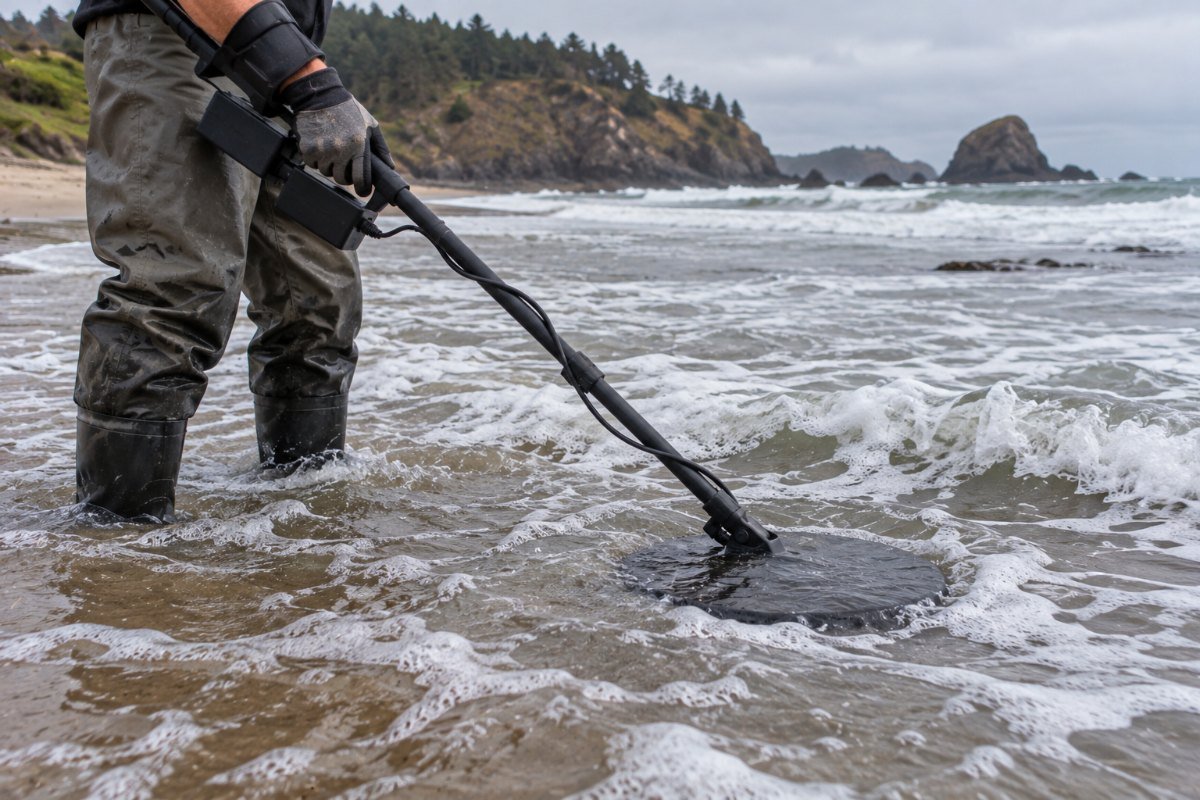
That is why many serious surf hunters use pulse induction. Modern multi-frequency VLF detectors, like several in our underwater metal detector guide, have closed much of this gap. They handle wet salt sand well on their own. Many experienced surf hunters still choose PI for working in the water itself.
Where Pulse Induction Detectors Fall Short
The ground-handling advantages come at a real cost. It is worth understanding what you give up before spending the extra money.
The biggest tradeoff is target identification. A PI detector reads a decay signal instead of comparing two continuous waveforms. Because of this, it cannot reliably tell you what kind of metal caused a signal, the way a VLF detector can. Kellyco's overview of detector types makes the same point.
Some higher-end PI detectors add basic discrimination (a setting that ignores signals from metals you don't want, like iron). The long-running Garrett ATX, for example, offers 25 discrimination levels plus a dedicated iron-check function. Its manual recommends running with discrimination off for maximum detection of all metals, only raising it to drop specific nuisance targets like pull tabs or foil (source: Garrett ATX owner's manual). That is a much coarser form of target identification than a VLF detector's conductivity-based readout. In practice, this means a pulse induction metal detector often sends you digging more trash. That includes nails, bottle caps, and scrap metal, since it has a harder time screening that trash out before you dig.
PI detectors can also be less sensitive to very small targets, like tiny gold flakes or thin jewelry. The Gold Prospectors Association of America (GPAA) prospecting guide notes that a VLF can have the edge on very small, shallow targets. This is one reason some experienced prospectors carry both machines. They use a PI detector to find a productive patch of ground through depth and mineral tolerance, then a sensitive VLF detector to work that patch slowly by hand.
Finally, there is price, covered in the next section. Pulse induction detectors are specialty instruments built for specific, demanding conditions. They are not general-purpose hobby detectors, and their price reflects that.
What You'll Pay for a Pulse Induction Detector
Pulse induction detectors don't sell at the price points most beginners expect. A first real VLF detector usually costs about $150 to $300, as covered in our how much do metal detectors cost guide. Complete pulse induction detectors from the major brands start around $2,300 and reach about $7,000 for a flagship gold machine. Based on current listings from specialty detector dealers, here is roughly what the major pulse induction models cost as of October 2026:
- Garrett Axiom: about $2,300 for the Axiom Lite, and about $2,900 to $3,200 for the full package with extra coils. Garrett's current pulse induction gold detector, which replaced the older ATX as the brand's main PI model. It keeps an Iron Check feature for flagging likely iron targets.
- Minelab SDC 2300: around $3,700, down from a list price of about $4,440. A compact PI gold detector that folds small and is waterproof to 10 feet.
- Nokta Magnetar 9000: around $5,000, after a large price cut in mid-2026. A newer pulse-based gold detector from Nokta built for deep, mineralized ground.
- Minelab GPX 6000: around $7,000, down from a list price of about $8,400. Minelab's flagship PI gold detector, built for maximum depth in difficult ground. Its control box is rainproof, but only the coils can go underwater.
These prices come from current listings at specialty metal detector dealers. Unlike the VLF detectors in our other buying guides, general retailers like Amazon rarely stock pulse induction detectors. The market for them is much smaller and more specialized. If you want to compare a specific model in person, handle one before buying, or read deeper technical reviews from experienced prospectors, a dedicated detector dealer or a hobbyist community like the Detector Prospector forum is a more reliable place to look than a general shopping search.
Who Really Needs One
Pulse induction makes sense for a specific type of detectorist, not every detectorist. You are a good candidate for a pulse induction metal detector if any of these describe your situation:
- You prospect for gold in mineralized ground, where VLF detectors consistently struggle with depth and false signals. Our best metal detector for gold guide already includes a PI option alongside VLF choices.
- You hunt in the surf itself, in saltwater deep enough that a standard waterproof VLF detector was not built for it.
- You relic hunt at a site known to have hot, mineralized soil where a VLF detector has already let you down.
- Maximum depth matters more to you than knowing exactly what you found before you dig, and you are willing to dig more trash targets to get it.
A pulse induction detector is probably not the right next purchase if you are new to the hobby. The same goes if you mainly hunt parks, yards, or dry beach sand, or want a detector that tells you what you likely found before you dig. For those situations, a VLF detector wins on price, weight, battery life, and day-to-day ease of use. Our beginner's guide and best metal detector for coins guide both cover VLF picks suited to that kind of detecting, at a fraction of the cost.
Frequently Asked Questions
Is pulse induction better than VLF?
Neither technology is better overall. Pulse induction performs better in mineralized soil and saltwater. VLF offers better target identification, better sensitivity to small targets, and a much lower price. Which one is better depends on where and what you are detecting.
Can a pulse induction metal detector find gold?
Yes. Pulse induction is a top choice for gold prospecting in mineralized ground, where PI detectors usually outperform VLF detectors. For very small, shallow gold in milder ground, a high-frequency VLF can still do better.
Do pulse induction detectors work underwater?
Some are. The Minelab SDC 2300, for example, is rated to 10 feet. Others are not built for it. The Minelab GPX 6000's control box is only rainproof, so only its coils can go underwater. Always check a specific model's own waterproof rating before taking it into the water.
Why don't pulse induction detectors discriminate between metals as well as VLF detectors?
A PI detector measures how long a decay signal lasts after each pulse, rather than comparing two continuous signals the way a VLF detector does. That decay signal does not carry enough information to reliably separate target types. Most PI detectors offer only basic iron-versus-non-iron discrimination, if any at all.
Why are pulse induction detectors so much more expensive than VLF detectors?
They are built for specific, demanding jobs, like gold prospecting and saltwater detecting. They use more specialized internal electronics and sell in much lower volumes than general-purpose VLF detectors aimed at beginners and casual hobbyists.
Can I use a pulse induction detector for everyday detecting in my yard or a local park?
You can, but it is usually not a good fit. A PI detector's weak target identification means you will dig far more trash in an already-hunted park or yard than you would with a VLF detector. You also will not gain any real advantage, since that ground is rarely mineralized enough to need PI in the first place.
Bottom Line
Pulse induction technology solves a real problem. VLF detectors struggle in mineralized ground and saltwater, while pulse induction detectors generally don't. That strength comes with real tradeoffs: weaker target identification and a much higher price. For most detectorists hunting parks, yards, and dry beaches, a good VLF detector remains the better choice. For gold prospectors working mineralized ground and surf hunters working in saltwater, a pulse induction metal detector is often the only tool built to handle the job well.