

The best metal detector for coins is one that reads coins clearly and separates them from the trash around them. For most people, that means a detector with a numbered target ID, adjustable discrimination (a setting that ignores signals from metals you don't want, like iron), and, ideally, multi-frequency operation. Our top pick is the Minelab Equinox 900. The Garrett ACE Apex is a strong lower-cost choice, and the Garrett ACE 300 is a simple single-frequency detector that still finds plenty of coins.
DetectorBrief is a participant in the Amazon Services LLC Associates Program, an affiliate advertising program designed to provide a means for sites to earn advertising fees by advertising and linking to Amazon.com.
This guide is based on manufacturer manuals and spec sheets, forum reports from experienced detectorists (people who hunt with metal detectors), and US government sources on where detecting is allowed. We have not tested most of these detectors side by side. The one exception is the Garrett ACE 300, which our writer has used for several years, mostly on the dry sand of a local beach. Where we rely on other people's experience, we say whose.
Table of Contents
Our Picks at a Glance
- Best overall: Minelab Equinox 900, multi-frequency with fine target ID and two coils in the box
- Best premium: XP Deus II, fully wireless and waterproof to 20 meters
- Best value multi-frequency: Garrett ACE Apex, with a coin mode and iron audio
- Best waterproof budget pick: Nokta Simplex Ultra, submersible to 5 meters
- Best simple starter: Garrett ACE 300, the detector our writer uses
Comparison Table
Specs are from each manufacturer's manual, brochure, or spec page. The ACE Apex target ID range is from Garrett's Australian brochure.
Which detector fits your hunt?
- New to the hobby: the Garrett ACE 300 is easy to set up and the detector our writer has used for years.
- Trashy parks: the Minelab Equinox 900 pairs adjustable notch discrimination with a fast recovery speed, plus a 6 inch coil option for crowded ground.
- Wet salt beaches: the Garrett ACE Apex adds a Multi-Salt mode built for saltwater sand.
- Advanced settings, experienced hunters: the XP Deus II is fully wireless with 12 factory programs and 49 single frequencies to tune.
- Occasional coin hunting on a budget: the Nokta Simplex Ultra is fully submersible to 5 meters and simple to run.
How We Chose These Detectors
To find the best metal detector for coins, we looked for detectors that are current models in 2026, sold on Amazon, and documented well enough to check their specs. Each one needed a coin-friendly feature set: a numbered target ID, a way to reject iron and trash, and a coil suited to parks or beaches. We read the manufacturers' manuals and spec sheets, compared what the top-ranking coin detector guides recommend, and read forum threads where owners describe how each machine handles coins.
We left out older models that still appear in many guides but have since been replaced, because their specs and availability are harder to confirm.
The 5 Best Metal Detectors for Coins
1. Minelab Equinox 900: best overall
The Minelab Equinox 900 runs Minelab's Multi-IQ simultaneous multi-frequency mode or single frequencies of 4, 5, 10, 15, 20, and 40 kHz. Its target ID runs from -19 to 0 for iron and 1 to 99 for non-ferrous metals, which gives more room to tell coins apart than a short scale. It has Park, Field, Beach, and Gold modes, adjustable iron bias, and adjustable recovery speed (how fast the detector resets between two targets close together). It comes with both an 11-inch and a 6-inch Double-D coil. Small coils suit sites with a lot of metal trash, so the 6-inch coil is the better choice for trashy parks.
It is waterproof to 5 meters (16 feet) and weighs 2.8 pounds. The main tradeoff is the learning curve. With this many settings, it takes longer to learn than a basic detector.

- Frequency
- Multi-IQ or 4 to 40 kHz
- Waterproof
- To 5 m (16 ft)
- Weight
- 2.8 lb
- Coils
- 11 in & 6 in Double-D (EQX11 / EQX06)
- Target ID
- -19 to 99
- Battery
- Li-ion, ~10-12 hr
Good for: all-round coin hunting in parks, fields and beaches, with two coils in the box.
Skip if: you want a detector you can learn in an afternoon. It has a lot of settings.
Pros
- Fine target ID from -19 to 99
- Comes with 11 inch and 6 inch Double-D coils
- Park, Field, Beach and Gold modes
Cons
- Takes longer to learn than a basic detector
2. XP Deus II: best premium detector
The XP Deus II is fully wireless, with no cable between the coil and the remote control. The XP manual describes simultaneous multi-frequency operation or 49 single frequencies from 4 to 45 kHz, a target ID display of 0 to 99, and 12 factory programs. The coil, remote, and optional bone conduction headphones are waterproof to 20 meters, and the lightest setup weighs about 750 grams.
XP notes in the same manual that a high frequency finds more small targets, while a low frequency can do better on a large mass or a group of coins. The Deus II lets you choose. It is the most expensive detector in this guide, so it makes the most sense for experienced detectorists who will use its wireless design and settings.

- Frequency
- Multi or 4 to 45 kHz
- Waterproof
- To 20 m
- Weight
- About 750 g (lightest setup)
- Coils
- 9 to 13" FMF DD (varies)
- Target ID
- 0 to 99
- Battery
- 3× Li-ion/Li-Po packs
Good for: experienced detectorists who will use its wireless design and settings.
Skip if: you are just starting out. It is the most expensive detector in this guide.
Pros
- Fully wireless, with no coil cable
- Multi-frequency or 49 single frequencies
- 12 factory programs
Cons
- Most expensive pick in this guide
3. Garrett ACE Apex: best value multi-frequency
The Garrett ACE Apex offers 5, 10, 15, and 20 kHz, plus Multi-Frequency and Multi-Salt modes, and it has a Coins mode and a US Coins mode. It adds Iron Audio, which helps identify iron objects such as bottle caps, and 175 points of ground balance (tuning the detector to ignore minerals in the soil). The stock coil is a 6-by-11-inch Double-D, and the coil is waterproof while the control box is rainproof.
For a coin hunter moving up from a basic detector, the Apex adds the two features entry-level machines often lack: multi-frequency and iron audio. Garrett markets it for beach hunting and shallow wading, but only the coil is waterproof, so keep the rainproof control box well above the water.

- Frequency
- Multi, Multi-Salt or 5 to 20 kHz
- Coil
- 6 x 11 in Double-D
- Waterproof
- Coil only
- Weight
- 2.5 lb
- Target ID
- 0 to 99
- Battery
- Li-ion, ~15 hr
Good for: a coin hunter moving up from a basic detector.
Skip if: you want to wade deep. Only the coil is waterproof, and the control box is rainproof.
Pros
- Coins and US Coins modes
- Iron Audio helps spot bottle caps
- Multi-Salt mode for saltwater beaches
Cons
- Control box is only rainproof
4. Nokta Simplex Ultra: best waterproof budget pick
The Nokta Simplex Ultra is a single-frequency detector that runs at 15 kHz, with a target ID of 1 to 99, and it is fully submersible to 5 meters. It weighs 2.6 pounds. That makes it useful for beach hunters who want to work the water's edge or wade, though as a single-frequency detector it will not handle wet salt sand as smoothly as a multi-frequency machine. Inland, it covers what most coin hunters need in parks and yards.

- Frequency
- 15 kHz
- Waterproof
- To 5 m
- Weight
- 2.6 lb
- Coils
- 11" DD (SX28)
- Target ID
- 1 to 99
- Battery
- Li-Po 2300mAh, ~12 hr
Good for: beach hunters on a budget who want to work the water's edge or wade.
Skip if: you hunt wet salt sand a lot. A multi-frequency detector handles it more smoothly.
Pros
- Fully submersible to 5 m
- Target ID from 1 to 99
- Covers parks and yards inland
Cons
- Single frequency, so less smooth on wet salt sand
5. Garrett ACE 300: best simple starter
The Garrett ACE 300 is the detector our writer has used for several years, mostly on the dry sand of a local beach, where coins and rings are the usual finds. There, it has been a dependable coin finder. It has a 0 to 99 target ID, five search modes including Coins, and 12 discrimination segments you can switch on or off. It runs at 8 kHz with a 7-by-10-inch concentric stock coil. The coil is submersible, but the control box is not.
Other owners describe it in similar terms. One reviewer called it "a coin vacuum" in a Findmall field test of the international version and praised how easy it is to set up. On TreasureNet, owner John-Edmonton wrote that it "really hits hard on pull tabs," which he called a curse for coin hunters but a blessing for anyone looking for gold rings.
The common criticisms are worth knowing before you buy:
- Some owners turn sensitivity below the default to keep it steady, especially in ground with a lot of metal trash and hot rocks (mineralized stones that give false signals), as discussed in this TreasureNet sensitivity thread.
- It has no iron audio. The ACE 400 has it, and so does the ACE Apex.
- Some forum members suggest spending more on an ACE 400 or a newer detector such as the Minelab Vanquish, as in this TreasureNet buying-advice thread.
- One UK owner of the international version says it works on the beach but is "not so great in the wet sand," as in this UK forum discussion. Garrett's manual does not address salt water.
If you mostly hunt parks, yards and the dry part of the beach and want a detector that is easy to learn, the ACE 300 is still a sound choice.

- Frequency
- 8 kHz
- Coil
- 7 x 10 in concentric
- Waterproof
- Coil only
- Weight
- 2.8 lb
- Target ID
- 0 to 99
- Battery
- 4× AA (included)
Good for: parks, yards and the dry part of the beach, with a detector that is easy to learn.
Skip if: you hunt wet salt sand or want iron audio. The ACE Apex has iron audio.
Pros
- Easy to set up
- Coins mode and 12 discrimination segments
- Our writer has used one for years on dry sand
Cons
- No iron audio
- Some owners lower sensitivity in trashy or mineralized ground
- Control box is not waterproof
Head-to-Head: Which Detector Should You Choose?
Minelab Equinox 900 vs. XP Deus II
Both are multi-frequency machines, but they sit in very different price and complexity tiers. The Equinox 900 comes with two coils in the box and is waterproof to 5 meters, enough for wading and shallow surf. The Deus II is fully wireless and waterproof to 20 meters, with 49 single frequencies against the Equinox's 6.
- Choose the Equinox 900 if you want two coil sizes without buying a second coil, and you don't need deep-water capability.
- Choose the Deus II if you want a cable-free setup, dive or wade deep regularly, or will make use of 49 single-frequency fine-tuning.
- The pick reverses if you only hunt dry parks and fields: the Deus II's extra waterproof depth goes unused, while the Equinox 900's two included coils add more everyday flexibility for less money.
- Paying the premium is unnecessary for a first multi-frequency detector, since the Deus II's extra settings add a steeper learning curve without a documented coin-ID advantage over the Equinox 900 at typical park depths.
Garrett ACE Apex vs. Nokta Simplex Ultra
The Apex runs single frequencies or simultaneous multi-frequency plus a dedicated Multi-Salt mode, with 175-point auto/manual ground balance and iron audio. The Simplex Ultra runs a single 15 kHz frequency but is fully submersible to 5 meters, detector and coil both, not just the coil.
- Choose the Apex if you want multi-frequency flexibility and iron audio to separate bottle caps from coins, and don't need to submerge the control box.
- Choose the Simplex Ultra if budget is tighter and you want a machine that is genuinely waterproof for wading, not just rain-resistant.
- The pick reverses at a saltwater beach with wet sand, where the Apex's Multi-Salt mode is a real advantage the Simplex Ultra's single frequency can't match.
- Paying the premium is unnecessary if you only hunt dry inland parks, where the Apex's Multi-Salt advantage never comes into play.
Garrett ACE 300 vs. Garrett ACE Apex
The ACE 300 runs a single 8 kHz frequency, adjustable in four small steps to dodge interference, with no iron audio. The Apex adds iron audio, Multi-Flex single/multi-frequency switching, and 175-point ground balance, at roughly double the price.
- Choose the ACE 300 if this is a first detector and you want the simplest learning curve at the lowest price in the Garrett lineup.
- Choose the Apex if the budget stretches and iron audio plus multi-frequency flexibility for mixed ground is worth the jump.
- The pick reverses at a site known to be heavy with foil and bottle caps, where the Apex's iron audio pays for itself quickly.
- Paying the premium is unnecessary on clean, well-mowed park lawns with little metal trash, where the ACE 300 does the same job for less.
Minelab Equinox 900 vs. Nokta Simplex Ultra
The Equinox 900 runs Multi-IQ plus 6 single frequencies with a 119-segment target ID scale and two included coils. The Simplex Ultra runs one 15 kHz frequency with a 99-segment scale and no second coil.
- Choose the Equinox 900 if you want multi-frequency performance across varied ground and finer target ID resolution, and the price gap isn't the deciding factor.
- Choose the Simplex Ultra if you are starting out or on a tight budget and still want full waterproofing, the only detector under $400 in this guide that is submersible rather than just coil-waterproof.
- This one does not reverse by situation the way the others do: none of the Simplex Ultra's core specs scale up to match the Equinox 900 regardless of ground type. It is a budget-vs-capability tradeoff more than a situational one.
- Paying the premium is unnecessary for a true beginner on a $300 to $400 budget, since a Simplex Ultra that actually gets used beats an Equinox 900 whose extra capability goes unused while someone is still learning the basics.
What Makes a Detector Good at Finding Coins
Target ID and how US coins read
A detector's target ID number is its estimate of what is under the coil, based on how strongly the target conducts electricity. Garrett's guide to reading a metal detector notes that the number reflects conductivity (how easily a metal carries electric current) and size together, not the type of metal alone. That is why a large silver coin reads higher than a small one, and why the same coin can read a little differently at different depths.

The scale also differs by brand, so the numbers are not interchangeable. A US quarter reads about 29 on the -9 to 40 scale of the Minelab Vanquish 440 and about 86 on the 0 to 99 scale of the Minelab Intrepid. The XP Deus II manual gives a large silver coin as about 95 on its 0 to 99 scale. Learn your own detector's numbers by testing known coins on the ground before you hunt.
What a coin is made of matters as much as its size. These are the US Mint's compositions for the coins you are most likely to find:
| Coin | Composition | Source |
|---|---|---|
| Cent from 1982 on (1982 has both types) | Copper-plated zinc (97.5% zinc, 2.5% copper) | US Mint |
| Cent just before the 1982 switch | 95% copper, 5% zinc | NGC |
| Nickel | 75% copper, 25% nickel | US Mint |
| Dime, quarter, half dollar today | Copper core with copper-nickel cladding | US Mint |
| Half dollar before 1965 | 90% silver | US Mint |
Nickels can be hard to pick out by tone alone. Garrett points out that a mid-range tone can mean foil or pull tabs, but also gold, many types of jewelry, and US nickels. If you notch (blocking just one range of target IDs) out pull tabs, you will also miss some nickels and rings.
Single frequency or multi-frequency
Lower frequencies respond better to large targets such as big silver coins, and higher frequencies respond better to small or low-conductive targets. Lower frequencies are better at finding bigger, deeper objects, while a high frequency detects more small targets. Many entry-level coin detectors run in the low to mid range, such as the ACE 300 at 8 kHz.
A multi-frequency detector transmits several frequencies at once. Garrett's explanation of multi-frequency detectors says this can give better target ID in highly mineralized (full of natural minerals that can confuse a detector) soil. The same article says the ACE Apex Multi-Salt option filters out the unwanted effects of salt on saltwater beaches. If you hunt only dry parks and yards, a good single-frequency detector is enough. If you hunt wet salt sand or mineralized ground, multi-frequency is worth paying for.
Discrimination, notch and iron audio
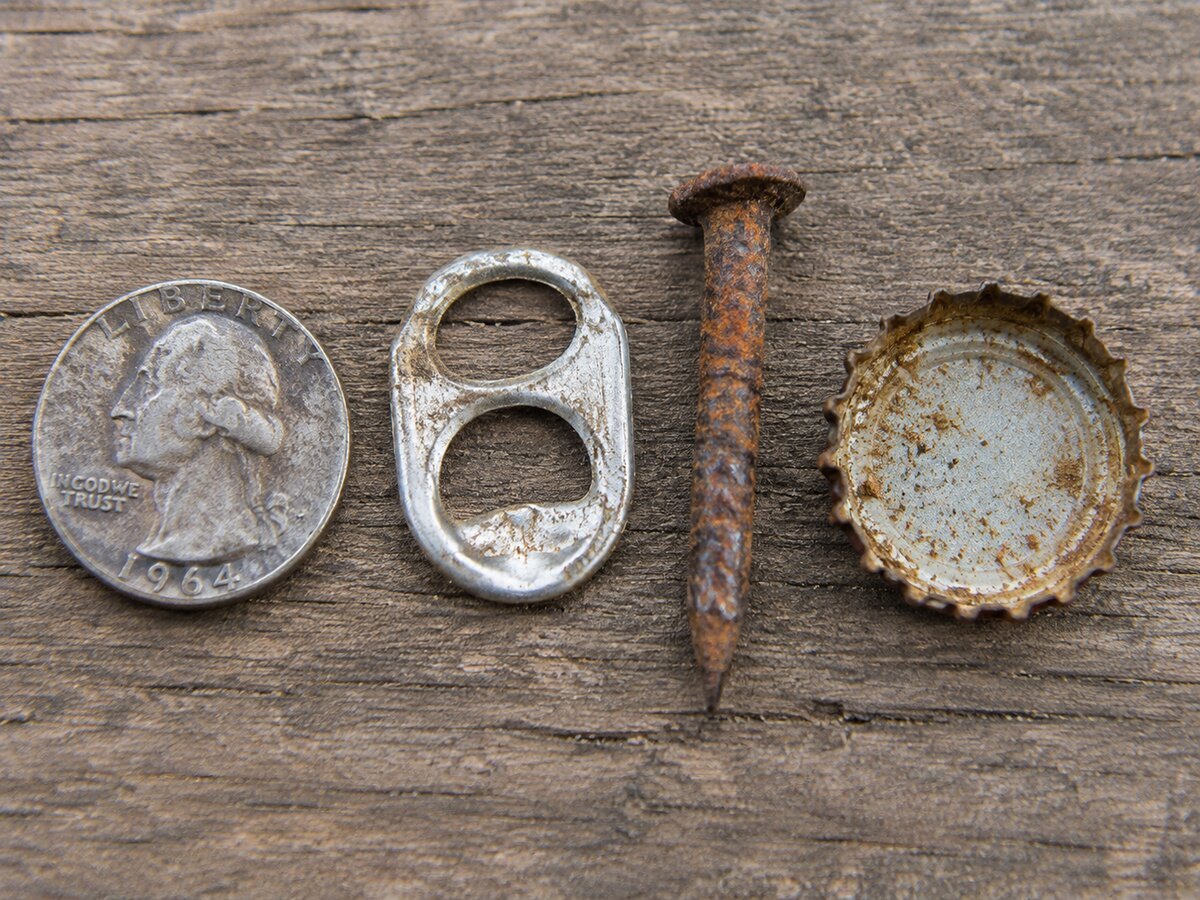
Discrimination lets the detector ignore targets in a chosen ID range, usually iron. Notch discrimination lets you reject one band, such as pull tabs, while keeping the ranges on either side. Iron audio does the opposite of hiding iron: it gives iron its own low tone so you can hear it and decide. Iron audio helps correctly identify complex iron objects such as bottle caps.
In a park full of nails and bottle caps, recovery speed matters too. A faster recovery speed lets the detector report two targets close together instead of blending them. Minelab describes its Equinox Park 2 mode as raising recovery speed to separate good targets from trash.
Coil size and type
Small coils are the best choice in areas with a lot of metal debris, while large coils produce a wider and deeper field. It also says a Double-D coil will significantly outperform a concentric coil over mineralized ground, while a concentric coil is a little more sensitive over clean ground. For coin hunting in old parks, a small Double-D coil is often worth adding.

How deep a detector finds coins
Ignore large depth claims in advertising. Minelab's own article on detection depth says most high-performance detectors can find objects 6 to 12 inches deep in optimal conditions, and that mineralized soil weakens the signal. For example, a 4-inch coil finds a quarter at about 4 inches. In parks with a lot of metal trash, separating targets often matters more than raw depth.
Ground balance
Soil contains minerals that can make a detector chatter or lose depth, especially at the beach or in red clay. Ground balance tunes the detector to ignore that mineral signal. The Garrett ACE Apex offers 175 points of auto/manual ground balance resolution, built to handle ground from mineralized soil to full saltwater. The Nokta Simplex Ultra offers automatic and manual ground balance, though Nokta's own manual notes that automatic balancing can struggle on wet beach sand, salty water, or heavily trashy sites, where manual balancing is the fallback. The XP Deus II offers tracking, grab, and manual ground balance modes. Entry-level detectors like the Garrett ACE 300 rely on simpler, more automatic ground handling, part of what keeps them easy to learn but less capable on difficult ground.
Weight and ergonomics
Weight matters most on long sessions, since a half-pound difference adds up over a few hours of swinging. Here is how the five compare:
- XP Deus II: about 1.65 lb / 750 g for the lightest wireless setup
- Garrett ACE Apex: 2.5 lb (1.13 kg)
- Nokta Simplex Ultra: 2.6 lb
- Minelab Equinox 900: 2.8 lb (1.27 kg)
- Garrett ACE 300: 2.8 lb (1.27 kg)
The Deus II's wireless design, with no control box riding on the shaft, is the biggest ergonomic outlier here, part of why experienced detectorists who hunt long days often cite it as the most comfortable of the five, independent of price.
Matching budget to realistic use
- Under $350: Garrett ACE 300 or Nokta Simplex Ultra. Pick the ACE 300 for the simplest learning curve on dry ground, or the Simplex Ultra if wading or shallow-water hunting matters, since it is the only detector in this tier that is fully submersible.
- $450 to $650: Garrett ACE Apex. The first tier where multi-frequency and iron audio come together, worth it once trashy sites or mixed ground are a regular part of the hunt.
- $1,100 and up: Minelab Equinox 900 or XP Deus II. Both are multi-frequency flagships. The Equinox 900 is the more practical all-rounder for most coin hunters, while the Deus II's extra cost buys deeper waterproofing and a fully wireless build best suited to experienced users.
Which Metal Detector Is Best for Where You Hunt?
The right detector often depends more on where you hunt than on the detector's price. Here is how the environments most coin hunters face tend to line up with the features covered above.
A detector with adjustable notch discrimination and a fast recovery speed tends to help here, since separating a coin from nearby pull tabs and foil matters more than raw depth.
These sites often hold a lot of iron nails and farm debris. Iron audio can help you work around the iron instead of skipping ground that might also hold a coin.
Dry sand has little mineral content, so most single and multi-frequency detectors tend to perform similarly here.
Multi-frequency detectors, or single-frequency detectors with a dedicated beach or salt mode, tend to hold a steadier target ID in wet salt sand, where plain single-frequency settings can read erratically.
Multi-frequency detectors or careful manual ground balance can help reduce the false signals and ID drift that iron-rich ground tends to cause.
Coverage from a large coil matters less in a small yard. A smaller coil can be easier to work between sprinkler heads, roots and fence lines.
None of this means one detector cannot work in several of these settings. Most of the five picks above cover more than one environment. Treat this as a guide to which features to weigh most, not a rule for which detector will or will not perform somewhere.
First Hunt: Practice Your Target ID

Before your first real hunt, spend 15 minutes building your own reference chart for how your specific detector reads common coins. This takes a few known targets and a patch of ground you can dig.
Keep in mind: these readings are specific to your own detector, its settings, your soil and the coin's condition. Treat your numbers as a personal reference, not a universal chart that matches someone else's machine.

- Gather one penny, one nickel, one dime, one quarter, and one pull tab.
- Bury each target 2 to 3 inches deep in your yard or a test plot, spaced a few feet apart, and note where each one is.
- Sweep over each target and write down the target ID number and tone your detector gives for that coin.
- Rebury the same coins around 6 inches deep and sweep again. Compare the numbers to what you got at a shallower depth.
- Keep your notes. As the target ID section above explains, these numbers are specific to your machine, its settings, the soil, and even the coin's condition, so treat your chart as a personal reference rather than a number that will match someone else's detector.
If your readings seem unstable or drift while you do this, check your detector's ground balance setting. Ground balance adjusts for the mineral content in your soil, and an unbalanced setting can make otherwise good targets read inconsistently.
Once you start finding real coins, a worn date or mint mark can be hard to read with the naked eye. A coin magnifier built for field use can help you make out those details on site.
Where You Can Legally Hunt for Coins in the US
The rules depend on who owns the land. These are the main ones to know:
- National parks: Federal regulation 36 CFR 2.1 (part of the Code of Federal Regulations) prohibits possessing or using a metal detector in National Park Service areas, unless it is broken down and stored or packed so it cannot be used.
- National forests: The Forest Service allows detecting as a low-impact activity in appropriate places, but not in or near areas likely to contain historic or cultural resources, and it asks you to fill every hole.
- BLM land: The Bureau of Land Management says in its collecting guide that modern money may be collected, but coins and artifacts more than 100 years old may not.
- Archaeological sites: The Archaeological Resources Protection Act makes it illegal to dig or remove archaeological resources on public or Indian lands without a permit.
- City and state parks: Rules vary widely. New York City requires a metal detecting permit in its parks, and a New York State Parks region permit limits detecting to sandy beaches and sets a maximum tool size. Check with the park office before you go.
- Private land: Always get the owner's permission first. The Federation of Metal Detector and Archaeological Clubs code of ethics lists this right after checking the law.
This is general information, not legal advice. Local rules change, so confirm them for the exact place you plan to hunt.
How to Recover Coins Without Damaging the Site
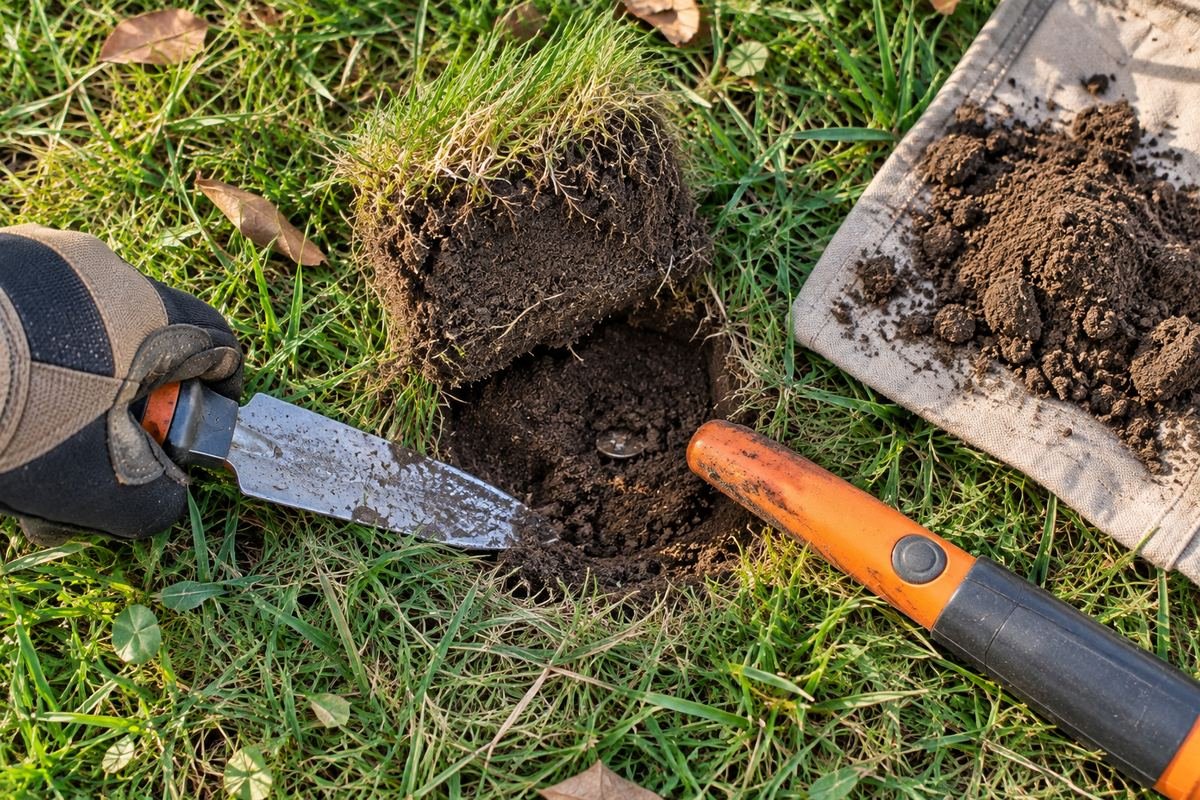
Careful digging keeps parks open to detecting. The code from the Federation of Metal Detector and Archaeological Clubs (FMDAC) asks members to replace the ground as it was, leave no visible trace in grass areas, and remove any trash they dig up. In practice, that means:
- Pinpoint the target before you dig, so the hole can be small. A pinpointer makes this much faster.
- Use a proper digging tool sized for the job, and follow any tool size limit set by the park.
- Check the hole again after you remove the coin, since targets are sometimes found close together.
- Fill the hole, press the soil or turf back into place, and carry out any trash you find.
Our guide on how to use a metal detector covers sweeping and pinpointing in more detail.
Should You Clean Coins You Find?
Not if they might be old or valuable. Rod Gillis of the American Numismatic Association says in an ANA video that in most cases cleaning a coin will destroy its value, and that experienced collectors can easily spot a cleaned coin. PCGS warns that abrasive cleaning can leave hairlines. For a coin too corroded to identify, the ANA suggests no more than a little distilled water and mild dish soap. Modern clad coins worth only face value have no collector value to lose, though it is worth checking them for errors first. Our guide to how to clean old coins covers the gentle wash and what never to use.
Frequently Asked Questions
What is the best metal detector for coins?
For most people, a multi-frequency detector with a detailed target ID and adjustable iron rejection, such as the Minelab Equinox 900. A simpler single-frequency detector like the Garrett ACE 300 also finds coins well in parks, yards, and dry sand.
Is multi-frequency better for coin hunting?
It helps most in mineralized soil and wet salt sand, where multi-frequency detectors give steadier target IDs. In dry parks and yards, a good single-frequency detector in the low to mid kHz range finds coins well.
How deep can a metal detector find coins?
Minelab says most high-performance detectors can find objects 6 to 12 inches deep in optimal conditions. Smaller coins, mineralized soil, and smaller coils reduce that.
Why does a nickel read like a pull tab?
Nickels, pull tabs, foil, and many gold rings fall in the same middle range of conductivity, so they produce similar target IDs. Rejecting pull tabs with notch discrimination will also cause you to miss some nickels and rings.
Can I use a metal detector in a national park?
No. Federal regulation 36 CFR 2.1 prohibits possessing or using a metal detector in National Park Service areas, unless it is broken down and stored or packed so it cannot be used. National forests, BLM land, and state and city parks each have their own rules.
Should I clean old coins I find with a metal detector?
Not if they might be valuable. The ANA says cleaning will destroy a coin's value in most cases, and PCGS, a coin grading company, warns that abrasive cleaning can leave hairlines. For a badly corroded coin, the ANA suggests at most distilled water and a little mild soap.
Bottom Line
The best metal detector for coins depends on where you hunt. For most coin hunters, the Minelab Equinox 900 is the best balance of target ID, multi-frequency performance, and waterproofing. The Garrett ACE Apex brings multi-frequency and iron audio at a lower cost, and the Nokta Simplex Ultra is a waterproof option for beach hunters on a budget. If you want something simple for parks, yards, and dry sand, the Garrett ACE 300 still finds plenty of coins. Whatever you choose, learn its target ID numbers on known coins, get permission before you dig, and fill every hole.
New to the hobby? Start with our guide to the best metal detector for beginners, or see how much metal detectors cost before you decide.