
Best Coin Magnifier: 5 Loupes for Reading Dates and Mint Marks
This guide explains what loupe power to buy for each job, why a triplet lens matters, how to light a worn dug coin so the date shows, and which magnifiers fit which job. The picks are based on the makers' published specs and what coin collectors report. We have not tested these magnifiers ourselves.
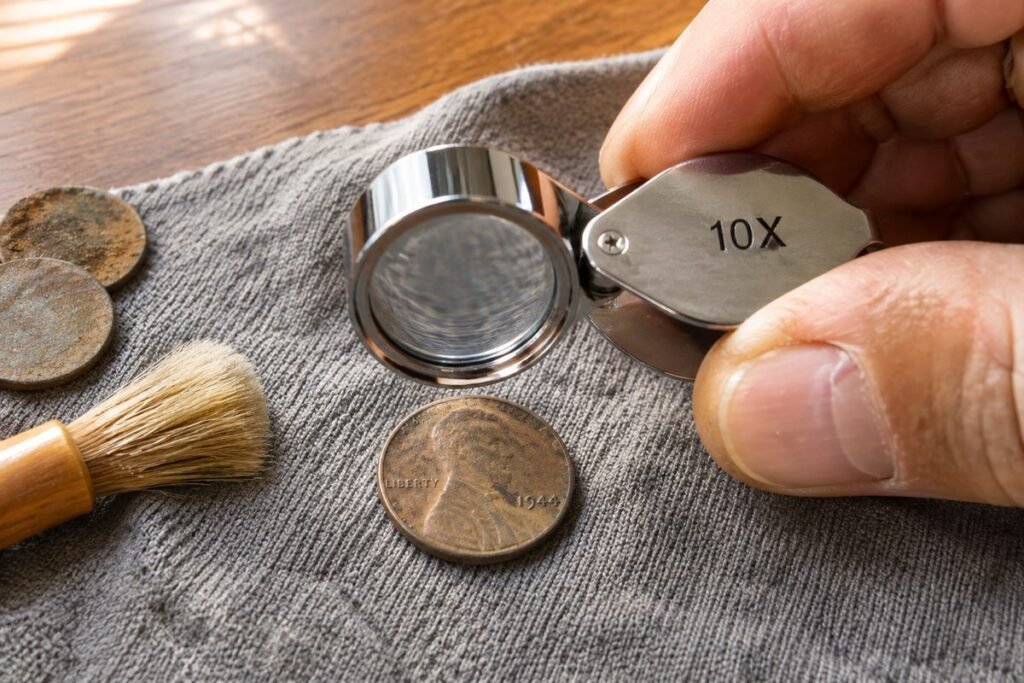
Quick answer: The best coin magnifier for most detectorists is a 10x triplet loupe, such as the Ade Advanced Optics 10x21, for reading dates and mint marks, plus a 7x stand magnifier if you want both hands free while you grade or sort. You do not need high power. The American Numismatic Association says most numismatists grade at 7x, and anything above about 14x is more than coins need.
DetectorBrief is a participant in the Amazon Services LLC Associates Program, an affiliate advertising program designed to provide a means for sites to earn advertising fees by advertising and linking to Amazon.com.
Key Takeaways
- 5x to 7x is great for general condition checks and a wider view.
- LED loupes help in dim light but can cause glare on worn surfaces.
- A magnifying glass offers a larger view and is comfortable for sorting, while a loupe is better for one tight spot.
- Choose a clear, well-built lens with minimal distortion over extreme power.
Table of Contents
Coin Magnifier Picker
Choose what you want to do with the coin. The picker suggests a power, shows roughly how much of the coin you will see, and points to the pick that fits.
Which coin magnifier do you need?
Pick the job, how you want to hold it, and your light.
Field of view and focus distance are rough estimates for a typical lens at each power.
Coin magnifier picker by DetectorBriefdetectorbrief.com
Quick Picks: Which Coin Magnifier to Get
| Pick | Magnifier | Power | Lens | Carry | Lighting | Best for / Skip if |
|---|---|---|---|---|---|---|
| Best for most detectorists | Ade Advanced Optics 10x21 Triplet Loupe (see details) | 10x | Triplet glass, 21mm | Pocket, leather case | None | Dates, mint marks, field use. Skip if you need both hands free for long sorting. |
| Best for grading, hands-free | Carson LumiLoupe 7x Stand Magnifier (LL-77) (see details) | 7x | Dual lens, about 1.75 in | Desk stand | None (clear base lets in room light) | Grading, sorting, hands-free. Skip if you want pocket carry. |
| Best with a built-in light | DANOPLUS 10x Triplet Loupe with LED and UV Light (see details) | 10x | Triplet, 21mm | Pocket, with case | Built-in LED and UV | Poor light, field use, mint marks. Skip if you mostly use a desk lamp. |
| Best premium loupe | Eschenbach 1182-10 Precision Loupe, 10x (see details) | 10x | Aplanatic glass, 23mm | Pocket, folding | None | Daily use, pocket carry. Skip if you only check a few finds a month. |
| Best stand for mint marks | Carson LumiLoupe 10x Stand Magnifier (LL-10) (see details) | 10x | Dual lens, 1.0 in | Desk stand | None (clear base lets in room light) | Mint marks, small details, hands-free. Skip if you want a whole-coin view. |
What Magnification Do Coins Need?
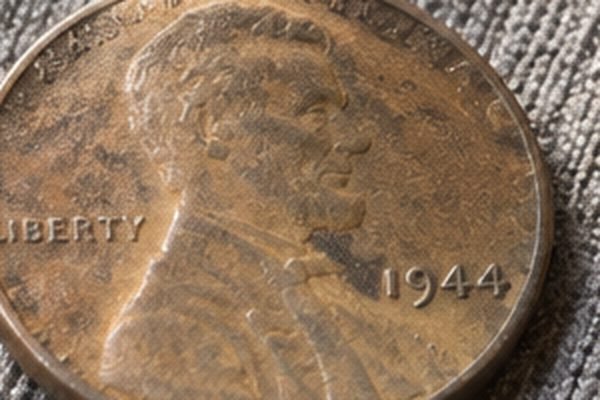
Less than you might think. The American Numismatic Association says most numismatists use a 7x loupe for grading, a 10x to 14x loupe for die varieties, and that anything under 7x will not show important flaws while anything over 14x is more than coins need. NGC recommends a 5x to 7x triplet loupe for most jobs and warns that grading under strong magnification tends to make you grade coins too low.

| Job | Power to use | Why |
|---|---|---|
| Grading or sorting finds | 5x to 7x | Shows the whole coin and normal wear without exaggerating it |
| Reading a worn date | 7x to 10x | Enough to see digit shapes, with room to tilt the coin under a light |
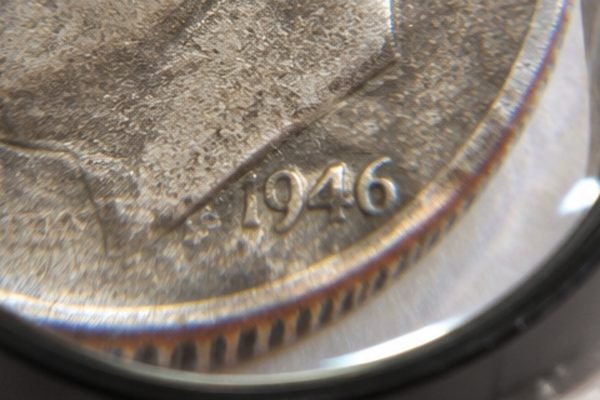
| Finding and reading a mint mark | 10x | Mint marks are small, so the extra power helps |
| Die varieties and doubled dies | 10x to 14x | Fine details need more power and a steady hand |
| Tiny or badly corroded details | A microscope | Past about 14x, a loupe view gets too small to use |
If you want more than 14x, a screen microscope is easier to use than a strong loupe. Our coin microscope guide covers those.
Why More Power Is Not Always Better
Every step up in power costs you two things. You see a smaller piece of the coin, and you have to hold the lens closer. Edmund Optics, a lens maker, puts the field of view at about 1.5 inches for a 5x magnifier and about half an inch at 10x. Edmund puts magnifying power at about 10 divided by the lens focal length in inches, so a 10x loupe has to sit roughly an inch from the coin to focus.
That is why a 5x or 7x lens is easier for scanning a whole coin, and a 10x lens is better for zooming in on one spot, like a mint mark. A 20x or 30x loupe shows only a tiny circle, and the slightest hand shake moves it out of focus.
Triplet vs Single Lens: What to Look For
Triplet lens
- Three lenses cemented together
- Corrects color fringing and edge blur
- Stays sharp across the frame
- Both the ANA and NGC suggest triplets for coins
Single lens
- Fine at low power
- Edges blur at 10x
- Shows colored rings at 10x
Also look for these:
- Doublet or two-element lens. Better than a single lens, and common in good stand magnifiers.
- Glass, not plastic. Glass lenses resist scratches and stay clear longer.
- Lens size. A wider lens, such as 21mm on a 10x loupe, shows more of the coin at once.
- A case. A loupe rides in a pocket or a finds pouch, so the lens needs a cover.
Coin Loupe vs. Magnifying Glass: What Is the Difference?
A coin loupe is compact and usually held close to the eye for a tight, detailed view of one area, such as a date or mint mark. A traditional magnifying glass has a handle and a larger viewing area, which makes it easier to scan a whole coin while sorting a pile of finds. Choose a loupe for portability and close inspection. Choose a magnifying glass for comfortable general viewing. Many collectors keep both on the desk.
How to Light a Worn Dug Coin
Light matters as much as the lens. NGC suggests a swing-arm desk lamp with a soft white incandescent bulb. For dug coins, the trick is the angle.

- Turn off the overhead light so one lamp does the work.
- Hold the coin by its edges and tilt it slowly under the lamp.
- Bring the light in low, almost across the face of the coin. The raised edges of worn digits cast small shadows that make them readable.
- Turn the coin a quarter turn at a time. A date that disappears at one angle often shows at another.
- Check the mint mark the same way, then try the lighted loupe if the spot is still unclear.
Collectors report that some LED lights look blue and flatten fine detail, while others show every hairline. If an LED loupe makes a coin look washed out, try your desk lamp at a low angle instead.
How to Use a Coin Loupe
- Hold the loupe close to your eye, almost touching your glasses or eyebrow.
- Rest the hand holding the loupe against your cheek so it stays steady.
- Bring the coin up toward the loupe, not the loupe down to the coin, until it comes into focus.
- Keep both eyes open. It feels odd at first, but it causes less eye strain.
- Brace your elbows on the table for long looks.

The Best Coin Magnifiers on Amazon
Best for most detectorists: Ade Advanced Optics 10x21 Triplet Loupe
This is a classic folding jeweler's loupe with a 10x triplet lens and a 21mm lens opening, which is wide for a 10x loupe. The listing names coins as one of its uses and says the bonded triplet gives a sharp image from edge to edge.
A 10x triplet is the most useful single magnifier for dug coins: enough power for mint marks, but still a usable view. It folds into its own housing and comes with a leather case with a snap, so it can live in a finds pouch.
Ade Advanced Optics 10x21 Triplet Loupe
Why it made the list: A 10x triplet is the most useful single magnifier for dug coins, and this one has a wide 21mm lens and a leather case.
Pros
- Triplet lens for a sharp, color-true view
- Wide 21mm lens for a 10x loupe
- Leather case for pocket carry
Cons
- No light of its own
- Takes practice to hold steady at 10x
Skip if: you need both hands free for long sorting sessions. Look at the LumiLoupe stand magnifiers.
Check Price on AmazonBest for grading, hands-free: Carson LumiLoupe 7x Stand Magnifier (LL-77)
The LumiLoupe is a stand magnifier. You set it on top of the coin, and it is already in focus, so both hands stay free. The clear base lets room light in from the sides, and the large lens (Carson's Amazon listing gives 1.75 inches) shows a big part of a coin at once.
At 7x, it sits at the power the ANA says most numismatists use for grading, making it a good tool for sorting a pile of finds or checking wear.
Carson LumiLoupe 7x Stand Magnifier (LL-77)
Why it made the list: It is pre-focused at 7x, the power the ANA says most numismatists use for grading, and both hands stay free.
Pros
- No focusing, just set it on the coin
- Both hands stay free
- Clear base lets in room light
Cons
- Not a triplet lens
- Too bulky for a finds pouch
Skip if: you want to carry it in a pocket in the field. A folding loupe travels better.
Check Price on AmazonBest with a built-in light: DANOPLUS 10x Triplet Loupe with LED and UV Light
This 10x loupe has a 21mm achromatic triplet glass lens in an aluminum body, plus a built-in LED light and a UV light. The kit includes a protective case, a lens cloth, and a lanyard.
The LED helps when you check a find at dusk, in a truck cab, or anywhere without a good lamp. For a worn date, you may still get better results tilting the coin under a desk lamp, because a light built into the loupe shines straight down.
DANOPLUS 10x Triplet Loupe with LED and UV Light
Why it made the list: It is a 10x triplet with its own LED and UV light, so you can check a find where the light is poor.
Pros
- Light built in
- Triplet glass lens
- Case, cloth and lanyard included
Cons
- Built-in light shines straight down, which can flatten worn detail
- Needs batteries
Skip if: you mostly look at coins under a good desk lamp. The Ade loupe does the same job without batteries.
Check Price on AmazonBest premium loupe: Eschenbach 1182-10 Precision Loupe, 10x
Eschenbach is a German optics maker, and collectors on coin forums often name its loupes as premium favorites. This 10x precision loupe has a 23mm aplanatic glass lens, which means it stays sharp across the view, in a folding, fiberglass-reinforced housing.
It suits a collector who uses a loupe every day and wants a lens built to last. For occasional use, the Ade triplet covers the same job.
Eschenbach 1182-10 Precision Loupe, 10x
Why it made the list: Corrected glass in a folding housing, made in Germany, for a collector who uses a loupe every day.
Availability: This loupe is currently on backorder with an extended Amazon shipping time. Check the listing for the current delivery estimate before ordering.
Pros
- Made in Germany
- Corrected optical glass
- Folds into its own housing
Cons
- Narrow view, as with any 10x loupe
- Costs more than most loupes
Skip if: you only check a few finds a month. The Ade loupe is enough.
Check Price on AmazonBest stand for mint marks: Carson LumiLoupe 10x Stand Magnifier (LL-10)
This is the 10x version of the LumiLoupe. It has a 1-inch lens on a clear base about 2 inches across, and it is pre-focused, so you set it on the coin and look.
The higher power suits mint marks and small details, while the smaller lens shows less of the coin than the 7x model. If you grade and check mint marks often, owning both covers each job.
Carson LumiLoupe 10x Stand Magnifier (LL-10)
Why it made the list: It sits on the coin already in focus at 10x, so a small mint mark stays steady with no hand shake.
Pros
- Pre-focused, no hand shake
- Clear base lets in room light
- Small and light
Cons
- Smaller view than the 7x model
- Not a triplet lens
Skip if: you want to see the whole coin at once. The 7x LumiLoupe shows more.
Check Price on AmazonHandle the Coin, Not Just the Lens
- Hold coins by the edges. The ANA says to hold a coin between thumb and index finger by its edge and never touch the faces.
- Use gloves for good coins. Cotton gloves are traditional, and some dealers prefer powder-free nitrile because cotton can shed threads.
- Work over something soft. A folded towel or a felt pad keeps a dropped coin from getting dinged.
- Do not scrub to see better. Cleaning can leave scratches that ruin a coin. If you must clean a dug coin, read our guide to cleaning old coins first.
- Store it right after you look. Our coin holders guide covers holders that will not damage a find.
Preservation warning: Use a magnifier to examine a coin, not to decide whether to clean it. PCGS says plainly not to clean coins yourself, since scrubbing or polishing can permanently lower a coin's value. If a find needs conservation, a professional grading service is the safer route.
Care and Maintenance for Your Coin Magnifier
A magnifier is a precision tool, and a little care keeps the view sharp for years.
- Store the loupe in its case when it is not in use, away from keys, coins, or digging tools that can scratch the lens.
- Wipe dust off before cleaning the glass, then use a lens cloth or solution made for coated optics rather than a shirt hem or tissue.
- Check the battery compartment of an LED or UV loupe for corrosion, and remove the batteries if you will not use it for months.
- Keep any magnifier away from direct heat and humidity, which can loosen glue or fog a multi-element lens.
Common Coin Magnifier Mistakes
Buying 30x or 40x for coins
The view is tiny and shaky
Fix: Use 7x for grading and 10x for mint marks
Holding the loupe far from the eye
Small, blurry view
Fix: Keep the loupe close to your eye and move the coin
Lighting the coin straight on
Worn dates disappear
Fix: Bring the light in low and tilt the coin
Grading at 10x or higher
Small marks look worse than they are, so you grade too low
Fix: Grade at 5x to 7x
Using a plastic single lens
Blurry, colored edges
Fix: Choose a glass triplet
Coin Magnifier Questions
What is the best magnification for looking at coins?
For grading, 5x to 7x. For mint marks and small details, 10x. The ANA says anything over 14x is more than most coins need.
Is a 10x loupe good for coins?
Yes. A 10x triplet loupe is the most useful single magnifier for detectorists, because it shows mint marks and worn dates while still showing a usable part of the coin.
What is a triplet loupe?
A loupe with three glass lenses bonded together. The design corrects color fringing and edge blur, so the whole view stays sharp.
Should I get a lighted loupe?
It helps in poor light, such as in the field. At home, a desk lamp aimed low across the coin often shows worn dates better than a light built into the loupe.
Is a magnifying glass or a microscope better for coins?
They do different jobs. A loupe is quick and portable for grading and mint marks. A screen microscope is better for very small or badly worn details and for taking photos.
How do I read a worn date on a dug coin?
Hold the coin by its edges under one lamp, bring the light in low across the face, and turn the coin slowly. The raised edges of the digits cast shadows that make them readable.
Is a coin loupe better than a magnifying glass?
They do different jobs. A loupe is compact and better for close inspection of dates and mint marks, held near the eye. A magnifying glass has a larger viewing area and a handle, which many collectors find more comfortable for sorting a pile of coins.
Can a magnifier damage a coin?
The lens itself will not damage a coin. The risk comes from handling, such as dropping a coin or touching its faces while you reposition it. Hold coins by the edges over a soft surface while you work with any magnifier.
What is the best coin magnifier for beginners?
A quality 10x folding loupe is a practical starting point. It handles dates, mint marks, and most surface checks without the narrow, shaky view of 20x or higher power.
Where to Go Next
When a loupe is not enough, our best coin microscope guide covers screen microscopes that show tiny details and take photos. For finding more coins to look at, see our best metal detector for coins and our list of metal detecting accessories worth buying first.
 Best Coin Microscope
 Coin Holders and Storage
 How to Clean Old Coins