
The best metal detector for beginners is the one that suits the ground you will hunt. A park detector that works well on dry grass can turn noisy on wet beach sand, and a detector that only has a waterproof coil will not survive a dunk in a creek. Pick for your hunting spot first and the brand second.
Below are six beginner-friendly detectors from Nokta, Minelab and Garrett, matched to parks, beaches, water and relic hunting. Every frequency, water rating and weight comes from the maker's own product page. We haven't run these six side by side, so treat this as a spec-based shortlist, and read how we research if you want the details.

DetectorBrief is a participant in the Amazon Services LLC Associates Program, an affiliate advertising program designed to provide a means for sites to earn advertising fees by advertising and linking to Amazon.com.
Table of Contents
Quick picks: the best metal detector for beginners by where you hunt
Here is the short version of the best metal detector for beginners in each situation. Weights are the maker's figures.
| Detector | Frequency | Water rating | Weight (maker) | Best for |
|---|---|---|---|---|
| Nokta Simplex Ultra (see details) | Single, 15 kHz | Fully submersible to 5 m | 1.2 kg (2.6 lb) | Parks, yards and wading, with the simplest menu |
| Minelab X-Terra Pro (see details) | Single, choose 5, 8, 10 or 15 kHz | Fully submersible to 5 m | 1.3 kg (2.9 lb) | Learning how frequency changes what you find |
| Minelab Vanquish 460 (see details) | Simultaneous multi (Multi-IQ) | Fully submersible to 5 m | 1.26 kg (2.8 lb) | Beaches and mixed ground with few settings |
| Nokta Double Score (see details) | Simultaneous multi or 15 kHz | Fully submersible to 5 m | 1.2 kg (2.6 lb) | Multi-frequency with more control to grow into |
| Garrett ACE Apex (see details) | Multi or 5, 10, 15, 20 kHz | Waterproof coil only | Not listed by Garrett | Coins and relics on land |
| Garrett ACE 300 (see details) | Single, 8 kHz | Not rated for submersion | 1.27 kg (2.8 lb) | A dry-land starter that runs on AA batteries |
How to choose your first metal detector
A few questions narrow the field faster than any feature list.
Start with where you will hunt
Parks, yards and sports fields are forgiving, and almost any detector here will find coins and jewelry there. Beaches split into two jobs. Dry sand is easy, while wet salt sand confuses many single-frequency machines. Wading in a lake or creek calls for a detector rated fully submersible. Gold prospecting is a different category with dedicated gold detectors, so none of these six are gold machines. If coins are your main target, our guide to the best metal detector for coins compares five detectors for parks, yards and beaches.
Single frequency or multi-frequency
A single-frequency detector transmits one frequency at a time. Lower frequencies reach deeper for larger targets, and higher ones pick up small, thin pieces like gold jewelry. Simultaneous multi-frequency detectors transmit several at once, which keeps them steadier on salt sand and mineralized (full of natural minerals that can confuse a detector) soil. For a park-only beginner, one good frequency is plenty. For the beach, multi-frequency is worth having from day one.
Read the water rating closely
"Waterproof" means two different things in this category. An IP68 detector (IP68 is the dust-tight and submersible waterproof rating), like four of the six below, can go fully underwater to the depth the maker states. A detector with only a waterproof coil can sweep a puddle or the surf line, but the control box has to stay dry.
Mind the weight and the length
Most beginner detectors weigh between 1.2 and 1.3 kg, and that difference disappears in the first hour. Collapsed length matters more if you travel. The Simplex Ultra and X-Terra Pro both fold down to about 63 cm, small enough for a backpack.
Features you can ignore at first
Manual ground balance, custom profiles, notch discrimination (a setting that ignores signals from metals you don't want, like iron) and iron bias all help later. On your first dozen hunts, run the default mode, dig most signals and learn what the tones mean. The detectors below all work well straight out of the box, which is why they made this list.
Ground balance and recovery speed
Ground balance tunes a detector to ignore the trace minerals in soil so they are not mistaken for a target. Most beginner machines handle this automatically, but it helps to know the three types you will see on spec sheets. They are automatic (the detector adjusts on its own and needs no input from you), manual (you dial it in yourself, useful once you are hunting more mineralized ground), and tracking (it keeps re-adjusting as you walk, a middle ground between the two). Start on automatic. You can switch to manual later once you understand what the ground is doing to your signals.
Recovery speed is how quickly a detector resets between two targets close together, which matters most in sites with a lot of buried trash, like old parks or home sites. A detector with slow recovery can miss a good target sitting right next to a piece of iron, reading them as one blurred signal instead of two separate ones. It isn't a priority for a beginner, but it is worth knowing the term for when you start comparing detectors beyond your first one.
The 6 best metal detectors for beginners
Each of these suits a different kind of hunting. Start with the one that matches where you plan to swing it most.
1. Nokta Simplex Ultra: best all-round first detector
Nokta calls the Simplex Ultra a turn-on-and-go detector with a single menu, which suits a beginner. It runs at 15 kHz, offers Field, Park, Beach and All Metal modes along with 4 Tone and 99 Tone options, and shows target IDs (a number or tone that hints at what kind of metal is buried) from 01 to 99. Ground balance can be automatic or manual.
It is rated IP68 and fully submersible to 5 m, weighs 1.2 kg and charges by USB. Small touches help too: a backlit screen and keypad, an LED flashlight, vibration alerts and Bluetooth audio. The shaft adjusts from 25 to 52 inches, and Nokta backs it with a 3-year warranty.

Nokta Simplex Ultra
- Frequency
- 15 kHz
- Waterproof
- IP68 to 5 m
- Weight
- 1.2 kg
2. Minelab X-Terra Pro: best for learning how frequency matters
The X-Terra Pro is a single-frequency detector, but you choose the frequency: 5, 8, 10 or 15 kHz. That makes it a good teacher, because you can hear how a low setting reaches for larger, deeper targets and a high one picks up small gold. It has Park, Field and Beach modes, each with two custom profiles, and 119 target ID segments.
Minelab rates it IP68 to 5 m and lists 1.3 kg. Ground balance can be automatic, manual or tracking, the internal battery is a 5100 mAh lithium-ion pack, and it collapses to 63 cm. Wireless headphones are sold separately. The warranty is 3 years.

Minelab X-Terra Pro
- Frequency
- 5, 8, 10 or 15 kHz
- Waterproof
- IP68 to 5 m
- Weight
- 1.3 kg
3. Minelab Vanquish 460: best multi-frequency for beaches
The Vanquish 460 brings Minelab's Multi-IQ simultaneous multi-frequency to a detector with very few settings. It has Park, Field and Beach modes plus a user profile, 10 sensitivity levels, 30 discrimination segments and three iron bias levels. Minelab says the older 440 had only a waterproof coil, while the 460 is IP68 and fully submersible to 5 m.
It weighs 1.26 kg, runs up to 10 hours on its built-in battery and comes with a 10 x 7 inch Double-D coil. It also has a red LED display, handgrip vibration and support for low-latency Bluetooth LE Audio, and wired headphones come in the box. For a beginner who lives near salt water, this is the easy pick.

Minelab Vanquish 460
- Frequency
- Multi-IQ
- Waterproof
- IP68 to 5 m
- Weight
- 1.26 kg
4. Nokta Double Score: best multi-frequency to grow into
The Double Score runs in simultaneous multi-frequency or a single 15 kHz, with Park, Field and Beach modes. It gives you more room to grow than the Vanquish: automatic, manual and tracking ground balance, an iron filter from 0 to 9, a notch filter and 10 sensitivity levels, with target IDs from 01 to 60.
Nokta rates it IP68 to 5 m and lists 1.2 kg including the 12 x 9 inch Double-D coil. The 3250 mAh battery lasts up to 12 hours, and the backlit screen, LED flashlight and vibration help in low light. Wireless headphones are not included with the base version.

Nokta Double Score
- Frequency
- Multi or 15 kHz
- Waterproof
- IP68 to 5 m
- Weight
- 1.2 kg
5. Garrett ACE Apex: best for coins and relics on land
The ACE Apex uses Garrett's Multi-Flex system. You can run it in multi-frequency, in a Multi-Salt setting for the beach, or in a single 5, 10, 15 or 20 kHz. Six search modes include Coins, Jewelry and Relics, and its iron handling is detailed: 20 notch pixels, 8 of them for iron, and eight Iron Volume settings.
Garrett calls the 6 x 11 inch Viper coil fully waterproof but does not rate the control box for submersion, so keep it out of the water. The built-in battery runs about 15 hours, and Z-Lynk wireless audio is built in. It suits a beginner who plans to hunt old homesites and fields more than beaches.

Garrett ACE Apex
- Frequency
- Multi or 5 to 20 kHz
- Coil
- 6 x 11 in, waterproof
- Battery
- About 15 hours
6. Garrett ACE 300: best simple dry-land starter
The ACE 300 is the plain, proven option. It runs at 8 kHz, has five search modes plus pinpoint, shows target IDs from 0 to 99 and weighs 2.8 lb. It runs on four AA batteries, which some beginners prefer to a built-in battery they cannot swap.
Garrett's page does not list a water rating for this model, so treat it as a dry-land detector. It has a 7 x 10 inch concentric coil and adjustable discrimination with 4 iron segments. It is a sound choice for parks and yards, and a weak one for the beach.
Garrett ACE 300
- Frequency
- 8 kHz
- Weight
- 2.8 lb
- Coil
- 7 x 10 in
What else you need to start
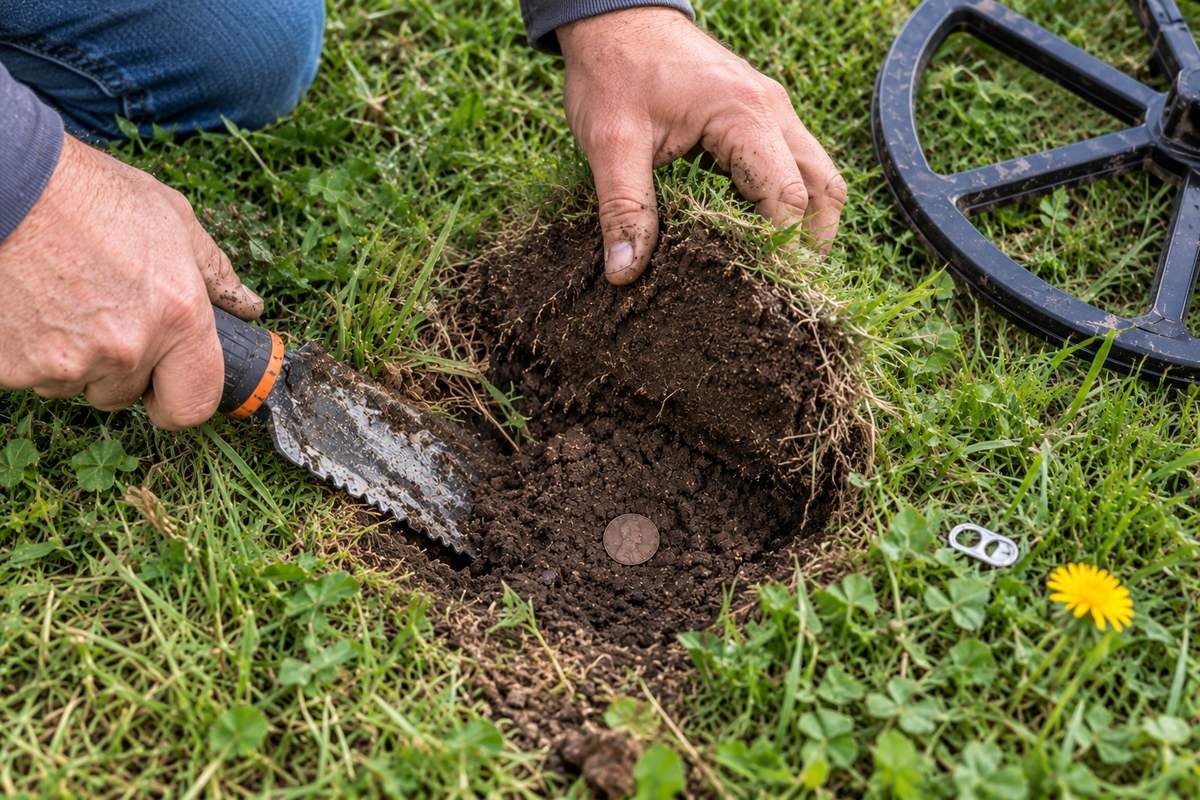
The detector is only part of the kit. Every beginner needs a few extras, and these are the pieces most beginners add in their first month.
- A pinpointer. A handheld probe that finds the exact spot in the hole, which saves time and keeps holes small.
- A digging tool. A sturdy hand digger for grass and soil, or a sand scoop for the beach.
- Headphones. They make faint signals easier to hear and keep the noise down in a park. Check whether your detector includes a pair.
- A finds pouch and a trash pouch. Carry out the trash you dig along with the good finds.
- Gloves. Beaches and parks hide glass and sharp metal.
Where you can and can't detect
Permission comes before any digging. On private land, get the owner's permission first, ideally in writing. City and county parks set their own rules, so ask the parks office before you go. Federal rules prohibit possessing or using a metal detector in national parks under 36 CFR 2.1 (part of the Code of Federal Regulations). The Archaeological Resources Protection Act makes it illegal to remove archaeological material at least 100 years old from federal or tribal land without a permit.
Wherever you hunt, fill every hole and leave the ground as you found it. Tidy detecting is the reason many parks still allow it.
Frequently asked questions
What is the easiest metal detector for a beginner?
The Nokta Simplex Ultra and the Garrett ACE 300 are the simplest to run. Nokta describes the Simplex Ultra as a turn-on-and-go detector with a single menu, and the ACE 300 uses one-touch controls. Either one lets you start in a default mode and learn the tones before touching any settings.
Do beginners need a multi-frequency metal detector?
Not for parks and yards, where a good single-frequency detector finds coins and jewelry well. Multi-frequency helps most on wet salt sand and heavily mineralized ground, where a single frequency tends to get noisy. If the beach is where you plan to hunt, start with a multi-frequency model like the Vanquish 460 or the Double Score.
Can I use a beginner metal detector at the beach?
Yes on dry sand with almost any detector. Wet salt sand is harder, because salt water reads like metal to many single-frequency machines, so a multi-frequency model or a dedicated Beach mode helps. For wading, choose a detector rated fully submersible, since a waterproof coil alone does not protect the control box.
Is a waterproof metal detector worth it for a beginner?
For most people, yes. Rain, wet grass and the edge of a creek are all common on an ordinary hunt. Four of the six picks here carry an IP68 rating and can go fully underwater to 5 m, while the Garrett ACE Apex only rates its coil as waterproof and the ACE 300 has no water rating listed.
Where can beginners metal detect legally?
Your own yard and private land where the owner has given permission are the safest places to start. Many city and county parks allow detecting, but the rules vary, so ask the parks office first. Detecting is prohibited in national parks, and removing artifacts at least 100 years old from federal or tribal land without a permit is illegal.
Which One to Buy
Choose the best metal detector for beginners by your hunting ground. For parks and yards with the gentlest learning curve, the Nokta Simplex Ultra is the easy start, and the Garrett ACE 300 works if you want AA batteries. If the beach is your plan, go straight to multi-frequency with the Minelab Vanquish 460 or the Nokta Double Score. For relic fields, the Garrett ACE Apex fits. Whatever you buy, add a pinpointer and a good digger, get permission and fill your holes.